Nest

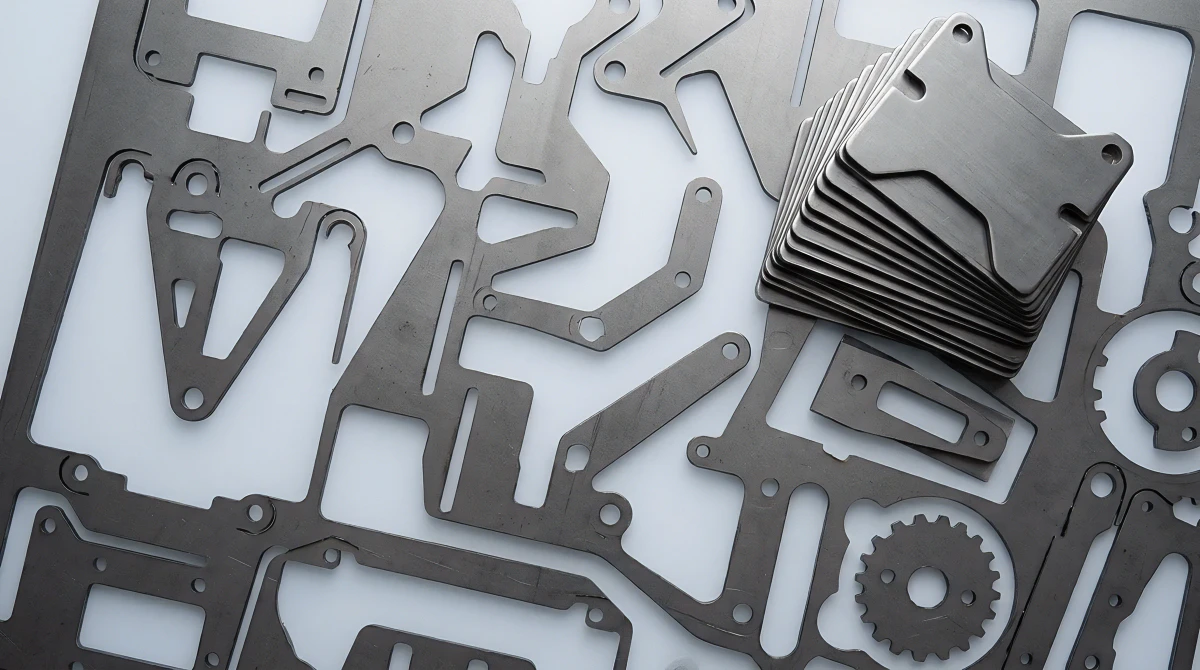
A nest is the arrangement of parts on a sheet for laser cutting, made by software from the cut files.

Every Nest article of the Sheet Metal Resources, newest first, each written from published standards, research and makers’ data.

Meaning

A nest is the arrangement of parts on a sheet for laser cutting, made by software from the cut files. It sets how many parts a sheet yields and how many sheets a batch takes. It also fixes spacing, rotation and the order of cuts. A saved nest lets a repeat order come out the same.

Spacing and Rotation

The beam removes a kerf, so each contour is offset by half its width. A thin web between two parts carries the heat of both cuts, so a nest leaves more than the kerf between them. Parts that are only cut and welded rotate freely. Parts that bend keep their bend lines to the rolling direction where the radius is tight. Parts of different thickness cannot share a sheet.
Read More

Sheet Edges

A nest drawn to the nominal sheet edge has no spare margin. EN 10131 sets width and length tolerances from zero upward, so a sheet arrives at nominal size or larger. A layout with margin on all four sides avoids scrap strips of unpredictable width. Parts nested near the edge also inherit the sheet’s edge wave. Keeping parts out of the outer strip avoids the worst of it.

Stress Release

Cutting releases stress inside the sheet as material is taken away. A part can move after it leaves the skeleton. That movement follows the layout of the nest, not the nominal flatness of the sheet. The first article of a new nest is therefore the test.

Gas and Program

The nesting file also carries the gas decision. The choice between oxygen, nitrogen and air is cheapest to make before the file is released. Pierce points belong in scrap, joined to each contour by a lead-in.

Repeat Orders

A saved nest with the same spacing, margin and kerf compensation yields the same count and size. A nest made fresh by a different programmer can pack the sheet differently. A part cut with a different lead-in also has a slightly different edge. The nest therefore goes into the job record with the first-piece measurement.

Inserting Self-Clinching Fasteners in Sheet Metal Step by Step

Cut the hole to size without deburring, check the sheet is soft enough, finish the panel, then squeeze the nut in parallel until its head meets the sheet.

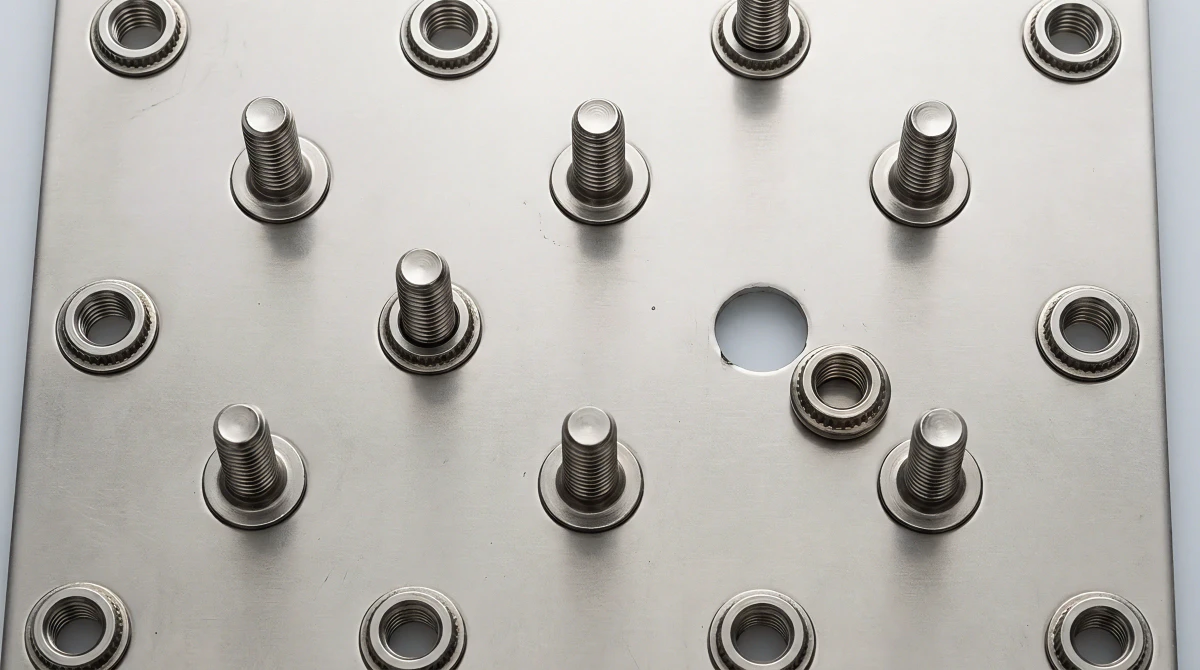
How a Self-Clinching Nut Locks Into Thin SheetInstallation takes three moves. First a hole of the specified size is punched or drilled, the nut's shank is placed in it, and a press squeezes nut and sheet between parallel surfaces until the head meets the sheet.
Minimum Bend Radius by Sheet Material and Thickness

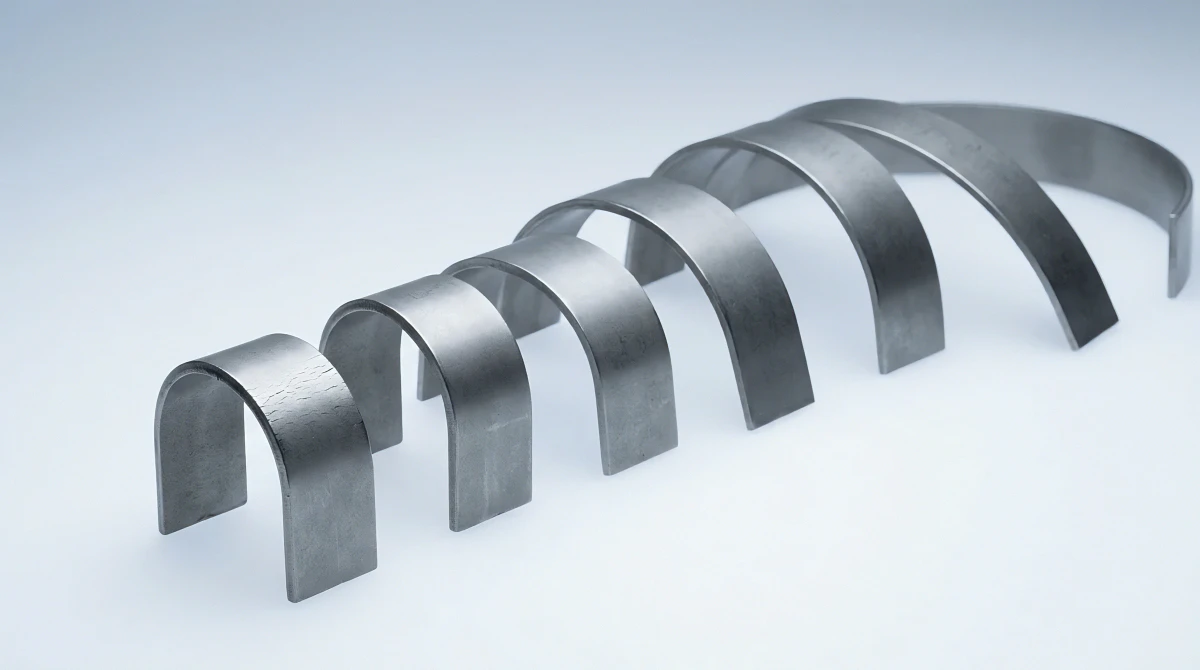
Take the minimum bend radius from the maker's table for the exact grade, temper, thickness and bend direction, then draw the radius the die forms.

Minimum Inside Bend Radius Values for Steel SheetSteel makers print the minimum as a multiple of thickness, t, and the multiple rises with strength and with thickness. The two hot-rolled cold-forming ranges below are the clearest published sets; mild cold-rolled steels such as DC01 come with formability figures but, in the makers' datasheets cited here, no printed radius.

High-Strength Steel Sheet S355 and S420 and the Springback It Brings

Order S355 or S420 for bent parts as the EN 10149-2 MC grade, bend at the recommended radius, and expect more springback than mild steel.

S355 and S420 Sheet Grades in EN 10149-2 and EN 10025-2High-strength sheet for cut and bent parts comes mainly from two European product standards. EN 10025-2 covers non-alloy structural steels, the S235, S275 and S355 families with the JR, J0 and J2 suffixes that set the impact-test temperature.

Cold Rolled DC01 and Hot Rolled S235 Steel Sheet for Cut and Bent Parts

Choose DC01 for thin formed parts that need tight thickness, flatness and a clean surface, and S235 for thicker load-bearing parts, then name the standard on the order.

DC01 and S235 Compared for Laser Cut and Bent Sheet PartsDC01 is a cold-rolled non-alloy mild steel for cold forming under EN 10130, material number 1.0330, which ArcelorMittal describes as having a guaranteed maximum yield and tensile strength, a guaranteed minimum elongation and good formability. S235 is a hot-rolled carbon-manganese structural steel under EN 10025-2, described by the same mill as having a guaranteed minimum yield and tensile strength and satisfactory ductility, in JR, J0 and J2 versions that differ in impact-test temperature.

Progressive Die Stamping After Laser Cut and Bent Sheet Metal Parts

A progressive die makes parts in minutes but takes months to build and wants a design that has stopped, so quantity and design stability choose between die and laser.

What Changes When a Part Moves From Laser and Brake to a DieIn laser and brake work, a flat blank is cut by a beam from a program and bent on a press brake with standard tooling, so a part exists the day the drawing and the sheet exist. In progressive stamping, a continuous strip passes through one die set with several stations.

Laser Cutting Sheet Metal With Oxygen, Nitrogen or Air Assist Gas

Oxygen, nitrogen and air each leave a different edge on laser cut sheet, and the choice of gas settles speed, finishing work and what the next process accepts.

Which Assist Gas Cuts Which Sheet MetalThree gases cover almost all sheet work: oxygen, nitrogen and compressed air. Oxygen belongs to carbon and low-alloy steel, nitrogen to stainless steel and aluminum, and air sits between them as the cheaper trade for thin parts that tolerate a slightly darker edge.

Steel Sheet Flatness Tolerance Before Cutting and Bending

Read flatness by thickness, width and strength class, specify normal or special, and keep parts clear of the edge wave strip.

What a Flatness Tolerance Covers Before the First CutIn the EN 10131 and EN 10051 tables, as ArcelorMittal prints them, flatness is a maximum deviation in millimeters, and the tables apply to sheet, not to coil. The extract does not describe the set-up used to measure it.

Cold Rolled Steel Sheet Thickness Tolerance Under EN 10131

Choose the tolerance column by what the part does with a thickness error, and write the strength class and column on the order.

What EN 10131 Allows on the Thickness of a Cold Rolled SheetEN 10131 covers cold rolled flat products of uncoated and electrolytically coated steel, and ArcelorMittal's tolerance tables reproduce its thickness limits as guarantees. The tables run from 0.35 mm to 3.00 mm and apply per nominal thickness band, per width class and per yield strength class.

Request a Sheet Metal Quote

Send the 2D drawing and the 3D file, with the quantity and the stage of the project. An engineer replies within 1 working day.

The quote form, the mutual NDA and the private folder for your files are on Protolis Atelier, with Sheet Metal chosen.

Request a Quote