Yield Strength

Yield strength is a sheet's proof stress, printed as the 0.2 % yield, which drives springback and picks the tolerance column in several steel standards.

Every Yield Strength article of the Sheet Metal Resources, newest first, each written from published standards, research and makers’ data.

Meaning

Yield strength is a sheet’s proof stress, printed as the 0.2 % yield, which drives springback and picks the tolerance column in several steel standards. Together with tensile strength it sets how hard a sheet is to bend. The value on a datasheet may be a typical figure or a guaranteed minimum.

Typical or Minimum

Cleveland-Cliffs prints a typical 0.2 % yield of 290 MPa (42 ksi) for 316L. It names ASTM A240 as the specification whose minimums a certificate is read against. A drawing that names the specification closes the question.
Read More

Tolerance Classes

EN 10131 sorts cold rolled steel into four yield classes: below 260 MPa (38 ksi), up to 340, up to 420 and above. The thickness band widens with each class. At 1.6 to 2.0 mm (0.063 to 0.079 in), it grows from ±0.10 to ±0.16 mm (±0.004 to ±0.006 in). The flatness table stops at 340 MPa (49 ksi), above which flatness is agreed at order. EN 10051 sorts hot rolled steel into categories A to D by yield.

Bending Response

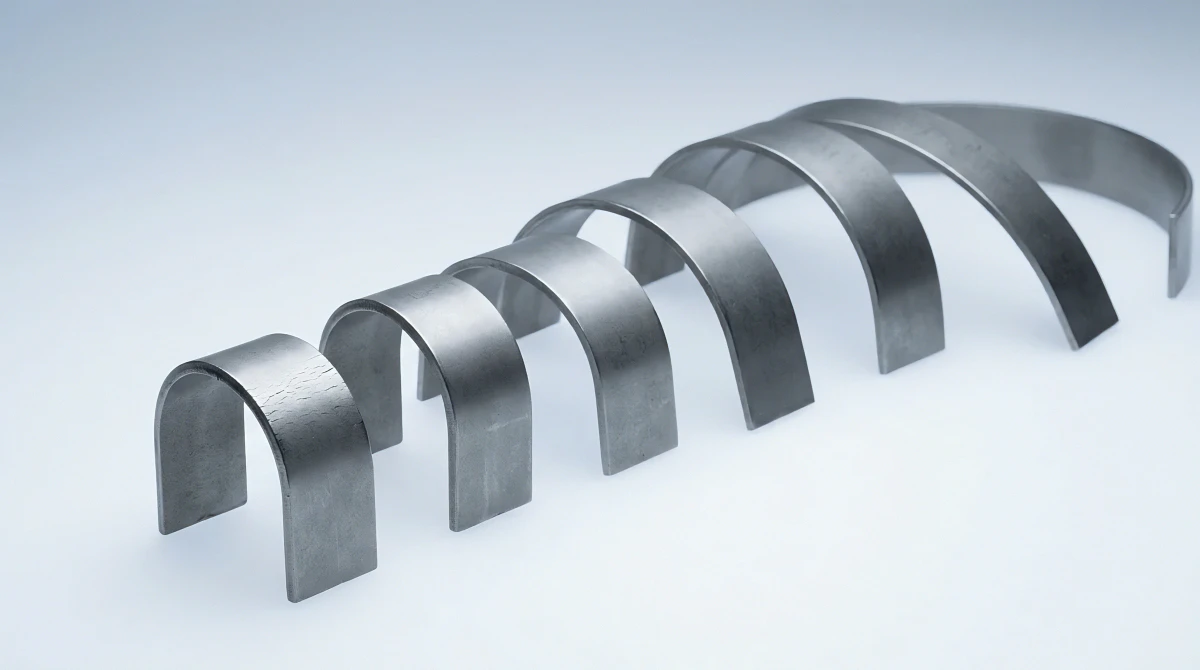
SSAB says yield strength has the biggest influence on springback. Two coils of the same grade differ in yield, so a second coil can open a bend by half a degree. A new coil lot brings its own yield and springback, so a running die is re-checked. The first piece of each lot is therefore measured before the run.

Heat and Temper

Yield falls as stainless heats. Cleveland-Cliffs lists 165 MPa (24 ksi) for 316L at 538 °C (1,000 °F), 57 % of its room value. In 5052, cold work sets yield, from 65 MPa (9 ksi) in soft O to 220 MPa (32 ksi) in H38.

Minimum Bend Radius by Sheet Material and Thickness

Take the minimum bend radius from the maker's table for the exact grade, temper, thickness and bend direction, then draw the radius the die forms.

Minimum Inside Bend Radius Values for Steel SheetSteel makers print the minimum as a multiple of thickness, t, and the multiple rises with strength and with thickness. The two hot-rolled cold-forming ranges below are the clearest published sets; mild cold-rolled steels such as DC01 come with formability figures but, in the makers' datasheets cited here, no printed radius.
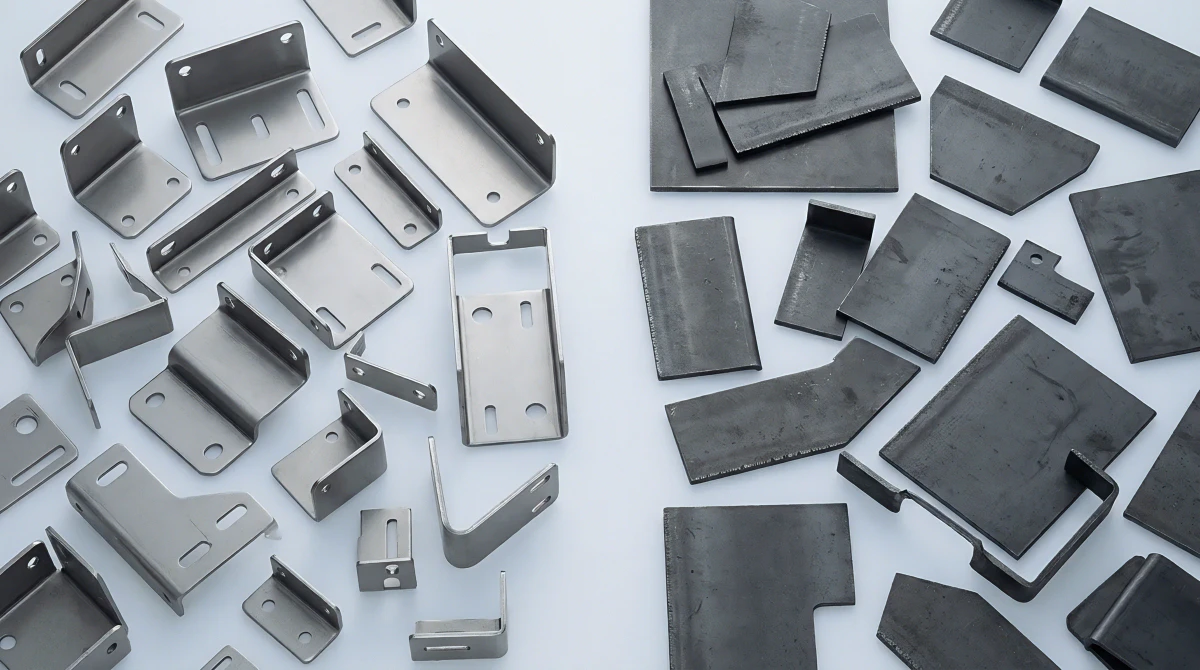
High-Strength Steel Sheet S355 and S420 and the Springback It Brings

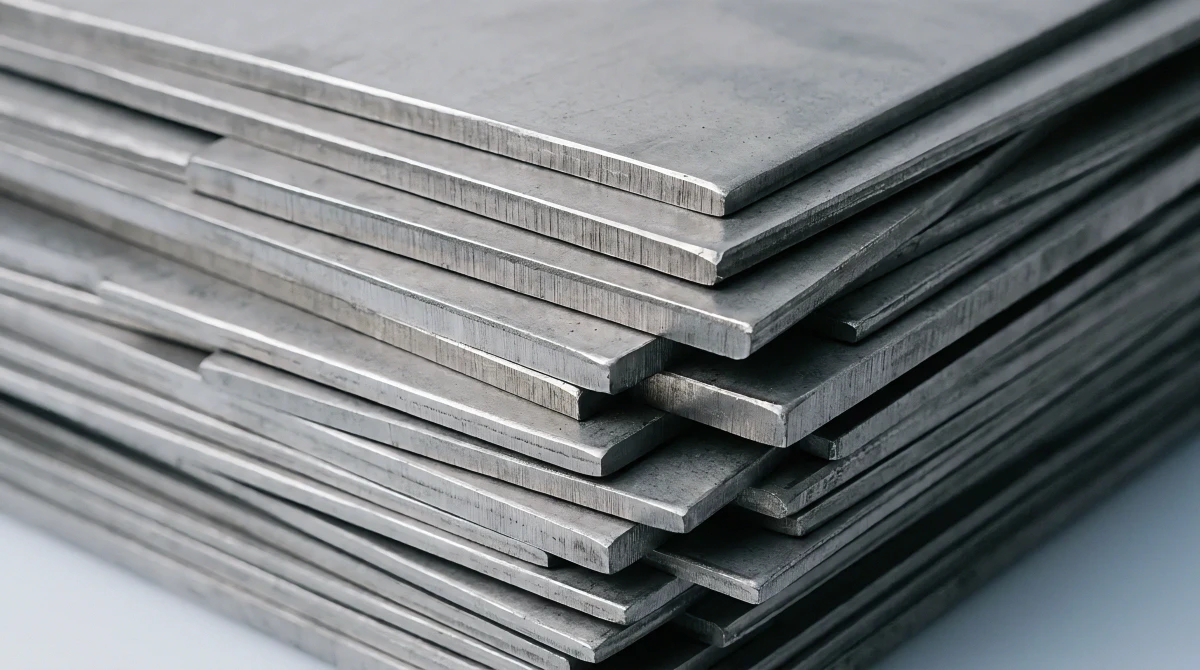
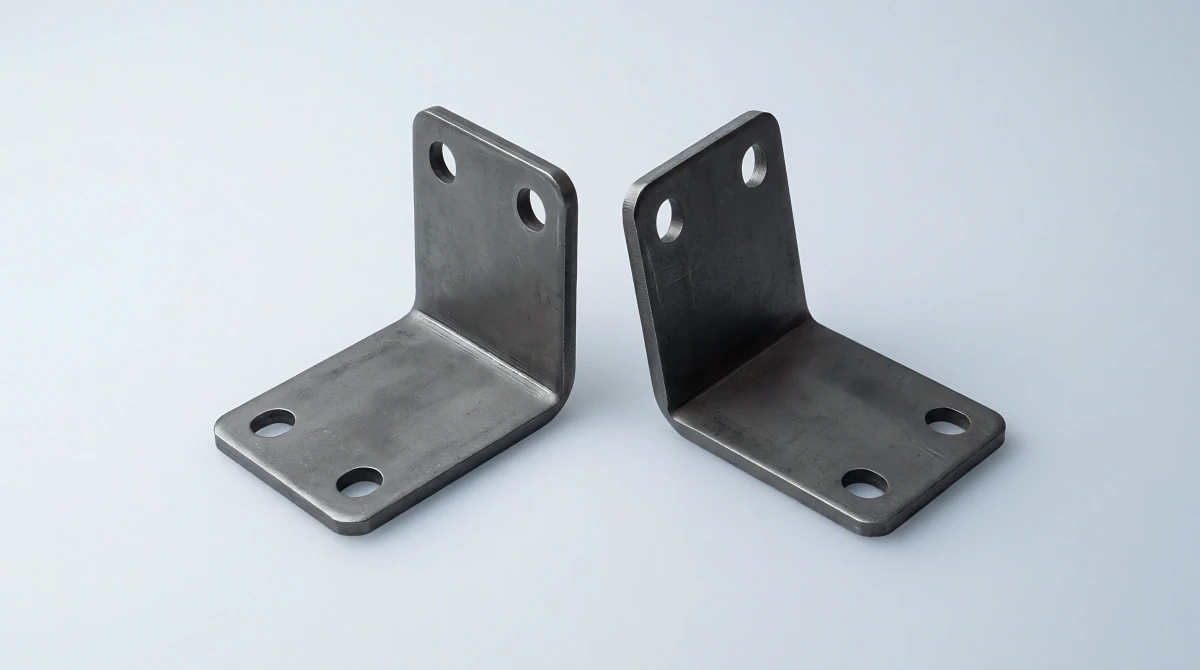
Order S355 or S420 for bent parts as the EN 10149-2 MC grade, bend at the recommended radius, and expect more springback than mild steel.

S355 and S420 Sheet Grades in EN 10149-2 and EN 10025-2High-strength sheet for cut and bent parts comes mainly from two European product standards. EN 10025-2 covers non-alloy structural steels, the S235, S275 and S355 families with the JR, J0 and J2 suffixes that set the impact-test temperature.

Cold Rolled DC01 and Hot Rolled S235 Steel Sheet for Cut and Bent Parts

Choose DC01 for thin formed parts that need tight thickness, flatness and a clean surface, and S235 for thicker load-bearing parts, then name the standard on the order.

DC01 and S235 Compared for Laser Cut and Bent Sheet PartsDC01 is a cold-rolled non-alloy mild steel for cold forming under EN 10130, material number 1.0330, which ArcelorMittal describes as having a guaranteed maximum yield and tensile strength, a guaranteed minimum elongation and good formability. S235 is a hot-rolled carbon-manganese structural steel under EN 10025-2, described by the same mill as having a guaranteed minimum yield and tensile strength and satisfactory ductility, in JR, J0 and J2 versions that differ in impact-test temperature.

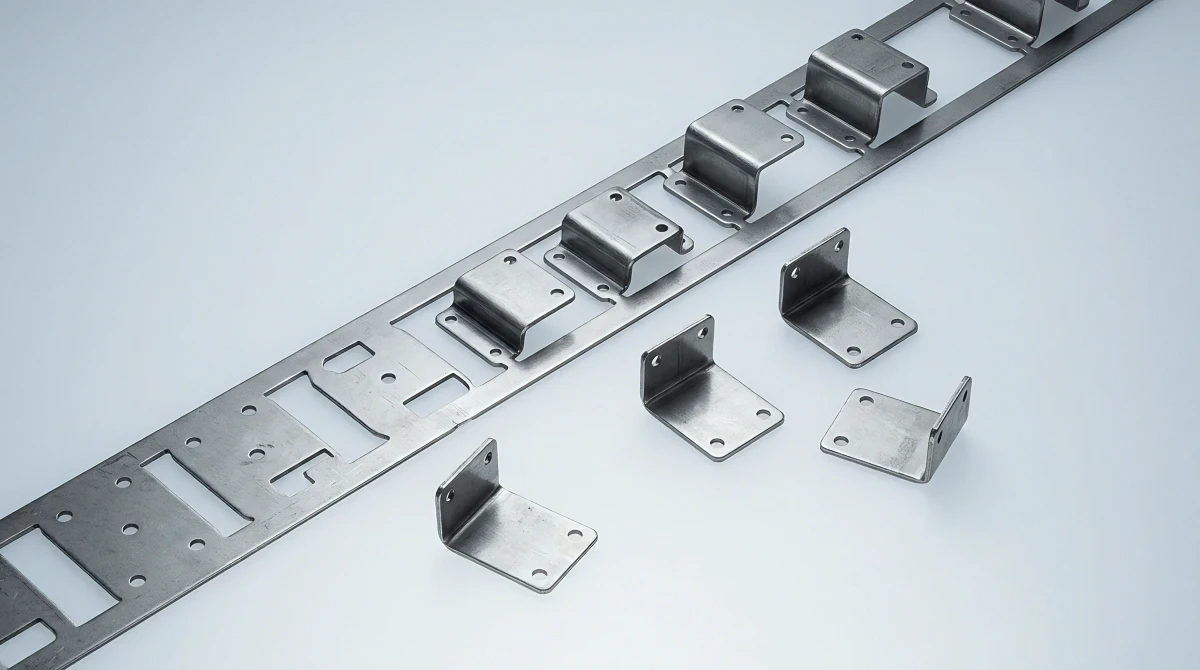
Progressive Die Stamping After Laser Cut and Bent Sheet Metal Parts

A progressive die makes parts in minutes but takes months to build and wants a design that has stopped, so quantity and design stability choose between die and laser.

What Changes When a Part Moves From Laser and Brake to a DieIn laser and brake work, a flat blank is cut by a beam from a program and bent on a press brake with standard tooling, so a part exists the day the drawing and the sheet exist. In progressive stamping, a continuous strip passes through one die set with several stations.

Press Brake Bending of Sheet Metal From Die Opening to Final Angle

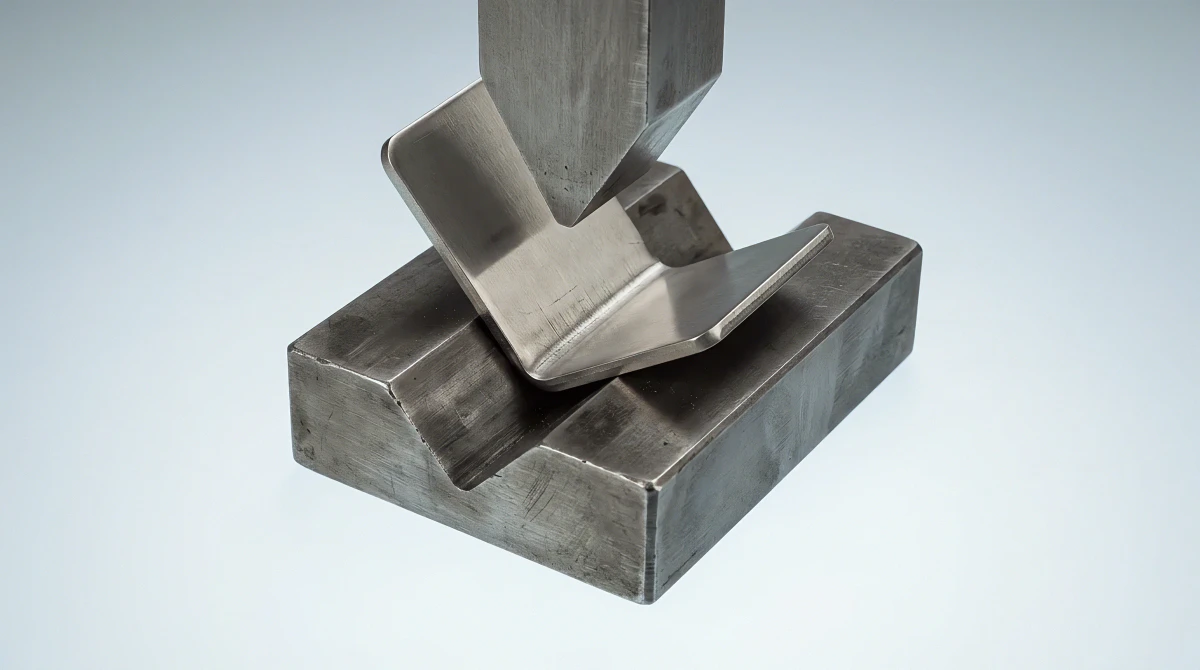
A press brake bend is decided by the die opening, which sets radius, flange length, springback and the flat pattern, so the first piece carries every assumption of the lot.

How a Press Brake Forms a Bend in AirMost sheet metal is bent by air forming. The punch pushes the sheet into a V-shaped die, and the sheet touches only three points: the two shoulders of the die and the tip of the punch.

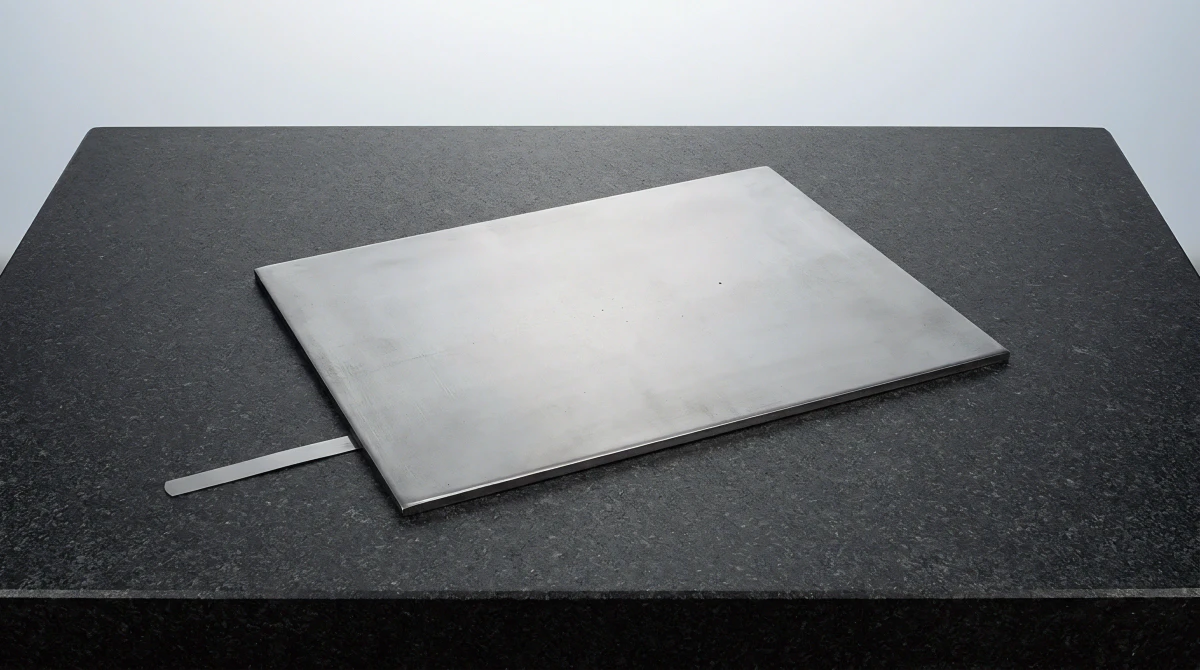
Steel Sheet Flatness Tolerance Before Cutting and Bending

Read flatness by thickness, width and strength class, specify normal or special, and keep parts clear of the edge wave strip.

What a Flatness Tolerance Covers Before the First CutIn the EN 10131 and EN 10051 tables, as ArcelorMittal prints them, flatness is a maximum deviation in millimeters, and the tables apply to sheet, not to coil. The extract does not describe the set-up used to measure it.

Cold Rolled Steel Sheet Thickness Tolerance Under EN 10131

Choose the tolerance column by what the part does with a thickness error, and write the strength class and column on the order.

What EN 10131 Allows on the Thickness of a Cold Rolled SheetEN 10131 covers cold rolled flat products of uncoated and electrolytically coated steel, and ArcelorMittal's tolerance tables reproduce its thickness limits as guarantees. The tables run from 0.35 mm to 3.00 mm and apply per nominal thickness band, per width class and per yield strength class.

5052 H32 Aluminum Sheet for Bending and Welding

Name the alloy, temper and specification, draw bend radii from a trial bend at the real thickness, and design welded joints to the annealed strength the weld leaves.

What 5052 H32 Offers a Bent and Welded Aluminum PartAlloy 5052 is an aluminum-magnesium alloy, registered in the United States in 1954. The Aluminum Association's international alloy register sets its composition: silicon 0.25 % maximum, iron 0.40 %, copper 0.10 %, manganese 0.10 %, magnesium 2.2 to 2.8 %, chromium 0.15 to 0.35 %, zinc 0.10 %, and 0.05 % each and 0.15 % in total for other elements, with aluminum the remainder.

316L Stainless Steel Sheet for Laser Cutting and Bending

Choose the molybdenum-bearing low-carbon grade for chloride exposure, plan overbend on the brake, and write the finish and weld tint rules on the drawing.

What 316L Sheet Adds Over 304L in a Cut and Bent PartType 316L is Type 316 with the carbon ceiling lowered from 0.08 % to 0.03 % by weight. Both carry 16.0 to 18.0 % chromium, 10.0 to 14.0 % nickel and 2.00 to 3.00 % molybdenum, according to the Cleveland-Cliffs product bulletin for the two types.

Request a Sheet Metal Quote

Send the 2D drawing and the 3D file, with the quantity and the stage of the project. An engineer replies within 1 working day.

The quote form, the mutual NDA and the private folder for your files are on Protolis Atelier, with Sheet Metal chosen.

Request a Quote