Flatness

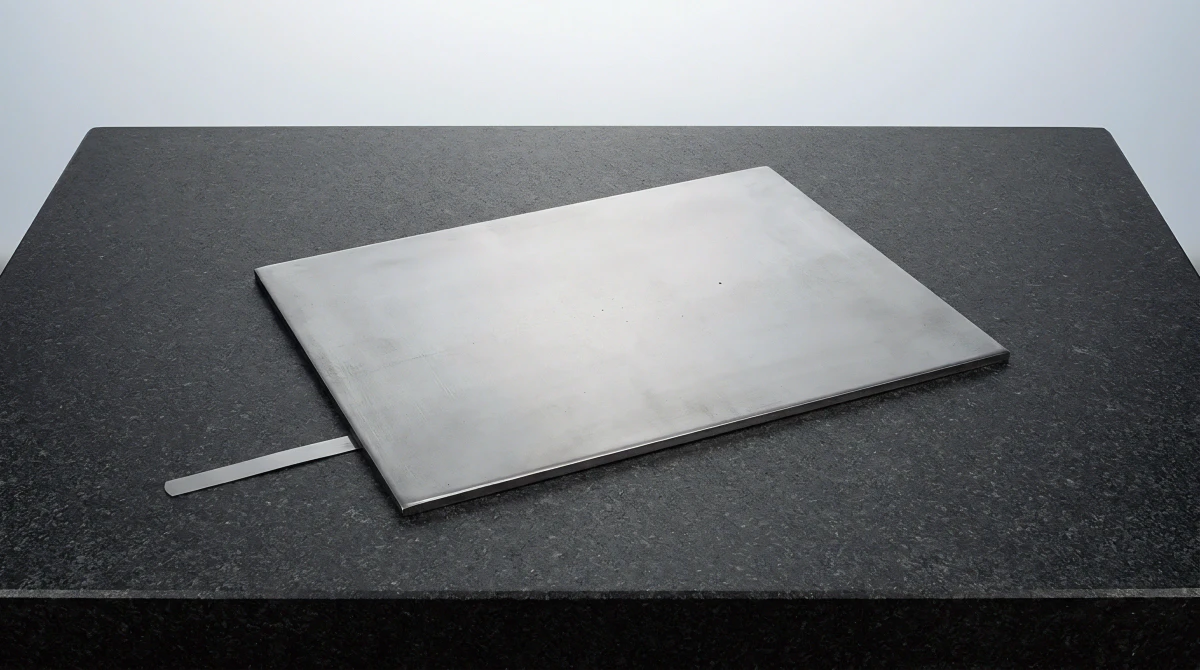
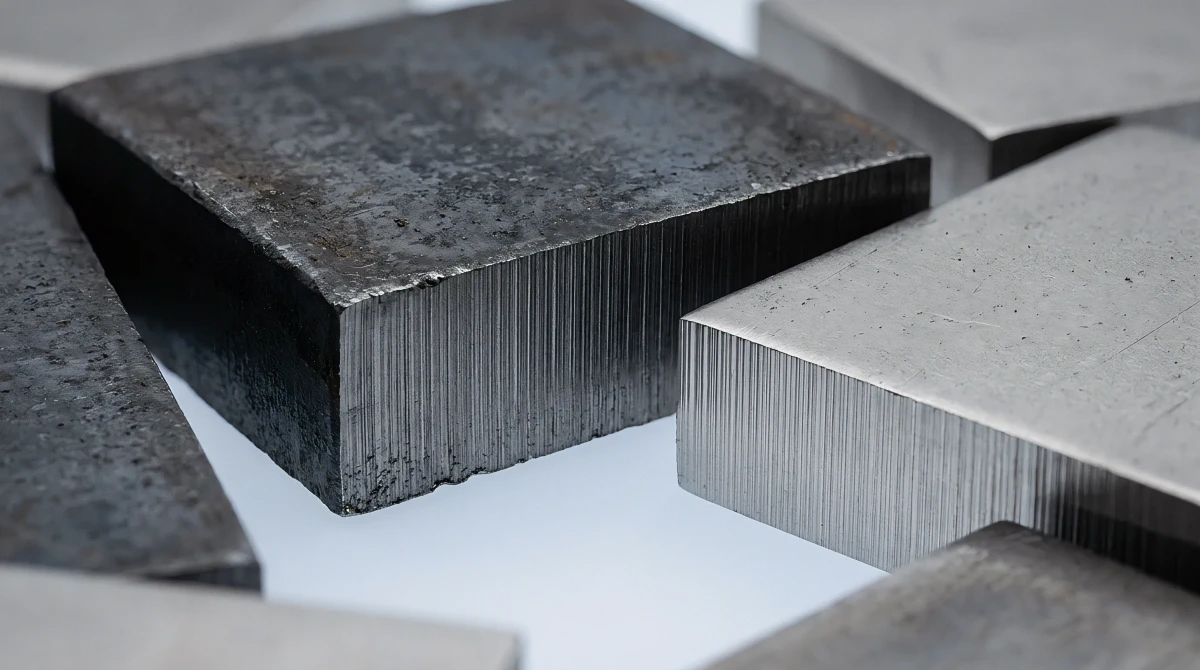
Flatness is how far a sheet or part departs from a flat plane, given in the steel standards as a maximum deviation in millimeters.

Every Flatness article of the Sheet Metal Resources, newest first, each written from published standards, research and makers’ data.

Meaning

Flatness is how far a sheet or part departs from a flat plane, given in the steel standards as a maximum deviation in millimeters. Before cutting, it comes only from the product standard. After welding, it is checked on the assembled part. ISO 9013 does not address it at all.

Product Standard

EN 10131 sets flatness of cold rolled sheet by width, thickness and strength class. A soft 1.5 mm (0.059 in) sheet 1,250 mm (49 in) wide may sit 8 mm (0.31 in) off flat on normal tolerance. The special column halves that to 4 mm (0.16 in). Thinner and wider sheet is allowed to be less flat. Above 340 MPa (49 ksi) yield, the value is agreed at order.
Read More

Hot Rolled

For hot rolled sheet, EN 10051 states its measuring length, 1,000 mm (39.4 in). Categories A to C share one column and the stronger category D has its own. The special column has its largest effect on thick plate.

Edge Waves

EN 10131 adds a rule for waves along the edge. On sheet under 1,500 mm (59 in) wide, a wave over 200 mm (7.9 in) long stays under 1 % of its length. Shorter waves are limited to 2 mm (0.079 in) high. Parts nested near the edge inherit the wave.

Not in ISO 9013

ISO 9013 states that flatness defects are not addressed and refers to the material standards. A part can meet its cut class and still carry the sheet’s curvature into the bend.

After Welding

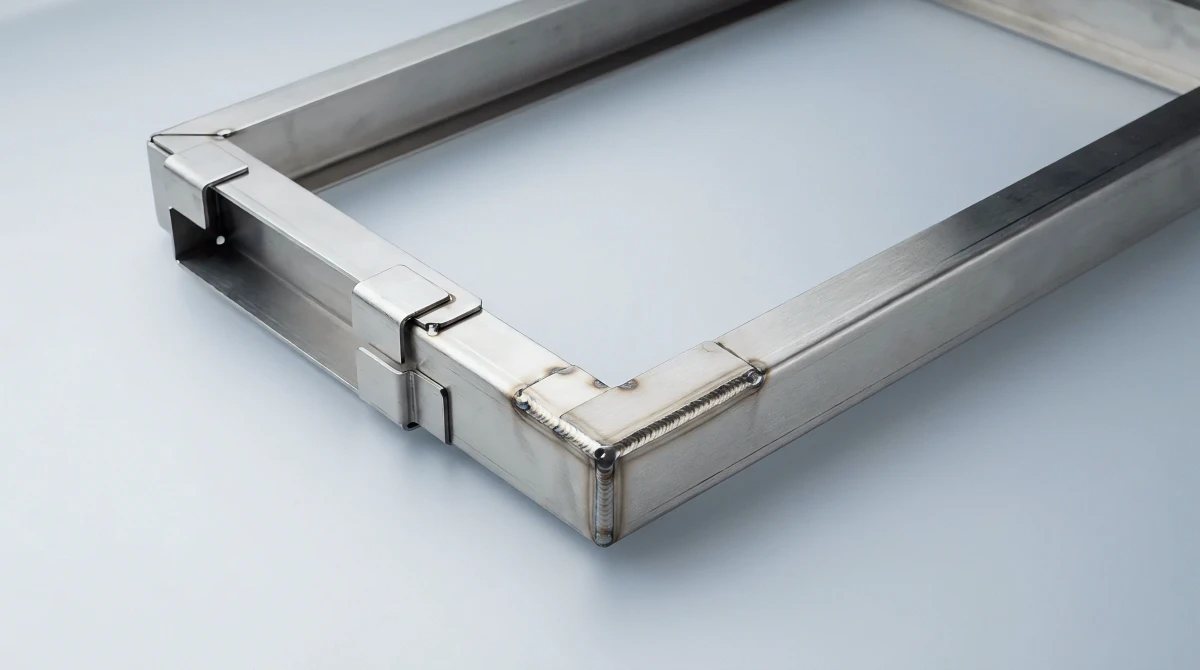
A welded assembly’s flatness is read on a surface plate with the part resting free. Clamping it down would hide the distortion the weld left.
ISO 2768 and DIN 6930 General Tolerances for Bent Sheet Metal Parts

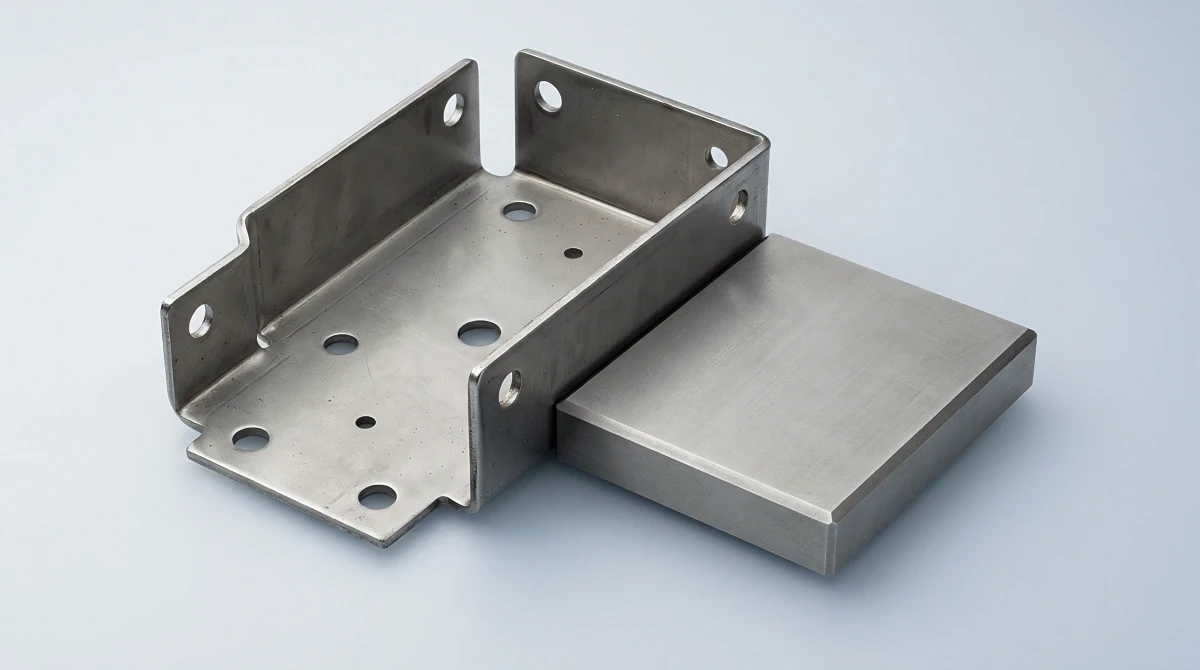
ISO 2768-1 covers sheet metal parts by size class; on a bent part its angular row decides fit, and DIN 6930-2 is written for stamped steel parts only.

What ISO 2768-1 Covers on a Sheet Metal DrawingISO 2768-1, first edition 1989-11-15, sets general tolerances for linear and angular dimensions without individual tolerance indications, in four classes. Its scope names sheet metal directly: it applies to the dimensions of parts produced by metal removal or parts formed from sheet metal.

High-Strength Steel Sheet S355 and S420 and the Springback It Brings

Order S355 or S420 for bent parts as the EN 10149-2 MC grade, bend at the recommended radius, and expect more springback than mild steel.

S355 and S420 Sheet Grades in EN 10149-2 and EN 10025-2High-strength sheet for cut and bent parts comes mainly from two European product standards. EN 10025-2 covers non-alloy structural steels, the S235, S275 and S355 families with the JR, J0 and J2 suffixes that set the impact-test temperature.

Cold Rolled DC01 and Hot Rolled S235 Steel Sheet for Cut and Bent Parts

Choose DC01 for thin formed parts that need tight thickness, flatness and a clean surface, and S235 for thicker load-bearing parts, then name the standard on the order.

DC01 and S235 Compared for Laser Cut and Bent Sheet PartsDC01 is a cold-rolled non-alloy mild steel for cold forming under EN 10130, material number 1.0330, which ArcelorMittal describes as having a guaranteed maximum yield and tensile strength, a guaranteed minimum elongation and good formability. S235 is a hot-rolled carbon-manganese structural steel under EN 10025-2, described by the same mill as having a guaranteed minimum yield and tensile strength and satisfactory ductility, in JR, J0 and J2 versions that differ in impact-test temperature.

Steel Sheet Flatness Tolerance Before Cutting and Bending

Read flatness by thickness, width and strength class, specify normal or special, and keep parts clear of the edge wave strip.

What a Flatness Tolerance Covers Before the First CutIn the EN 10131 and EN 10051 tables, as ArcelorMittal prints them, flatness is a maximum deviation in millimeters, and the tables apply to sheet, not to coil. The extract does not describe the set-up used to measure it.

ISO 9013 Laser Cut Edge Quality Ranges for Squareness and Roughness

Pick a squareness range and a roughness range by thickness, add the dimensional class, and agree how thin sheet is measured.

What the ISO 9013 Ranges Tell You About a Laser Cut EdgeISO 9013:2017 presents geometrical product specifications and quality tolerances for thermal cuts in materials suitable for oxyfuel flame cutting, plasma cutting and laser cutting. Its scope runs from 3 mm to 300 mm for flame cuts, 0.5 mm to 150 mm for plasma cuts and 0.5 mm to 32 mm for laser cuts.

Request a Sheet Metal Quote

Send the 2D drawing and the 3D file, with the quantity and the stage of the project. An engineer replies within 1 working day.

The quote form, the mutual NDA and the private folder for your files are on Protolis Atelier, with Sheet Metal chosen.

Request a Quote