Dimensional Class

A dimensional class is the ISO 9013 size tolerance table for a thermally cut part, class 1 or class 2, chosen apart from edge quality.

Every Dimensional Class article of the Sheet Metal Resources, newest first, each written from published standards, research and makers’ data.

Meaning

A dimensional class is the ISO 9013 size tolerance table for a thermally cut part, class 1 or class 2, chosen apart from edge quality. It is the last digit of an ISO 9013 designation. The class sets limit deviations for dimensions that carry no individual tolerance. It applies only when the drawing refers to the standard.

Two Tables

Class 1 is the tighter table, and Annex A lists it as typical for laser cutting up to 32 mm (1.26 in). Class 2 is typical for oxyfuel flame and plasma cutting. On sheet over 1 to 3.15 mm (0.04 to 0.124 in), class 2 is wider by a factor of 1.7 to 6. The factor is largest for the smallest features. A feature under 3 mm (0.12 in) on such sheet is ±0.10 mm (±0.004 in) in class 1. Class 2 allows it ±0.6 mm (±0.024 in).
Read More

Per Feature

A class belongs to a feature, not to a drawing. Mating features such as a tab and its slot take the tighter class on both. A mounting hole pattern with a 1 mm (0.04 in) bolt clearance can take class 2. A feature that needs better than the table is toleranced on its own. ISO 9013 allows limit deviations to be agreed separately.

Conditions

The classes cannot be reached at the start and end of a cut, at small radii or at sharp angles. The standard ties them to serviced machines run by trained operators. For lasers, the achievable tolerance depends on the part’s length-to-width ratio, geometry and sheet pre-treatment. The sheet and machine temperatures also have to suit the sheet’s movement as stress relaxes.

Flatness Gap

The classes describe the cut in the plane of the sheet. They do not cover the flatness of the sheet, which comes from the material standard. A part can meet its class and still carry the sheet’s curvature into the bend.
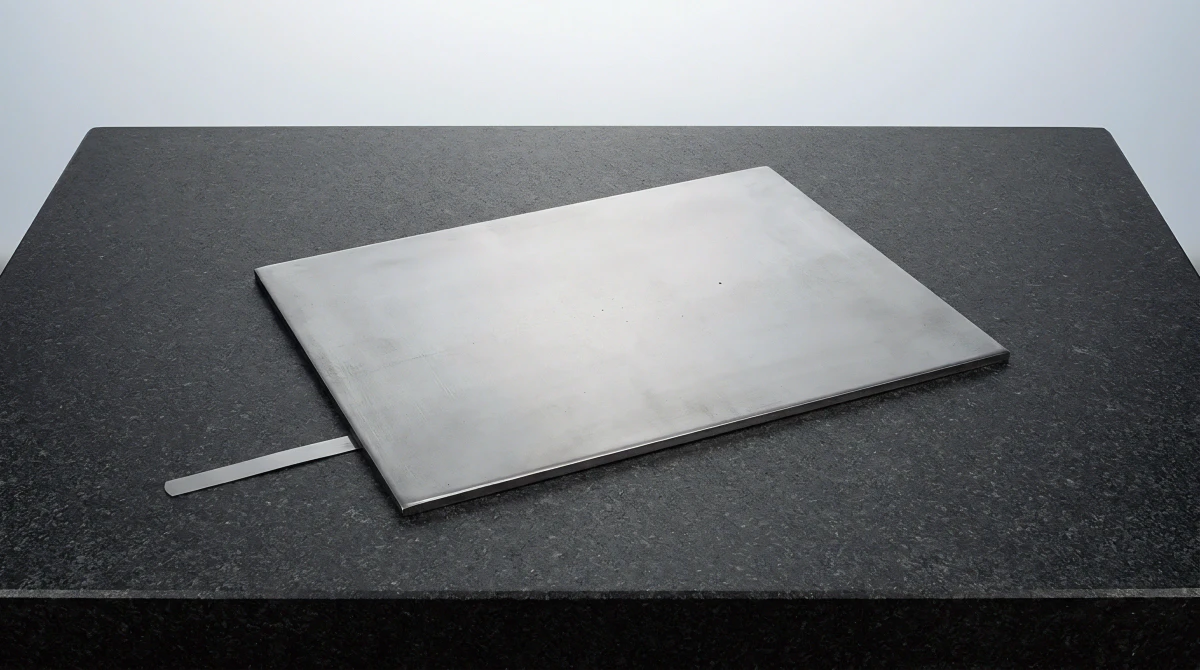
Steel Sheet Flatness Tolerance Before Cutting and Bending

Read flatness by thickness, width and strength class, specify normal or special, and keep parts clear of the edge wave strip.

What a Flatness Tolerance Covers Before the First CutIn the EN 10131 and EN 10051 tables, as ArcelorMittal prints them, flatness is a maximum deviation in millimeters, and the tables apply to sheet, not to coil. The extract does not describe the set-up used to measure it.

Laser Cut Part Dimensional Tolerance Under ISO 9013 Class 1 and Class 2

Pick the tighter or looser dimensional class per feature, read inside and outside sizes at their extremes, and anchor fit features to each other.

What Dimensional Tolerance Class 1 and Class 2 Cover on a Laser Cut PartISO 9013:2017 applies to laser cuts from 0.5 mm to 32 mm in thickness. Its clause 8 gives limit deviations for nominal dimensions in two classes, listed in Table 6 for class 1 and Table 7 for class 2.

ISO 9013 Laser Cut Edge Quality Ranges for Squareness and Roughness

Pick a squareness range and a roughness range by thickness, add the dimensional class, and agree how thin sheet is measured.

What the ISO 9013 Ranges Tell You About a Laser Cut EdgeISO 9013:2017 presents geometrical product specifications and quality tolerances for thermal cuts in materials suitable for oxyfuel flame cutting, plasma cutting and laser cutting. Its scope runs from 3 mm to 300 mm for flame cuts, 0.5 mm to 150 mm for plasma cuts and 0.5 mm to 32 mm for laser cuts.

Request a Sheet Metal Quote

Send the 2D drawing and the 3D file, with the quantity and the stage of the project. An engineer replies within 1 working day.

The quote form, the mutual NDA and the private folder for your files are on Protolis Atelier, with Sheet Metal chosen.

Request a Quote