Meaning
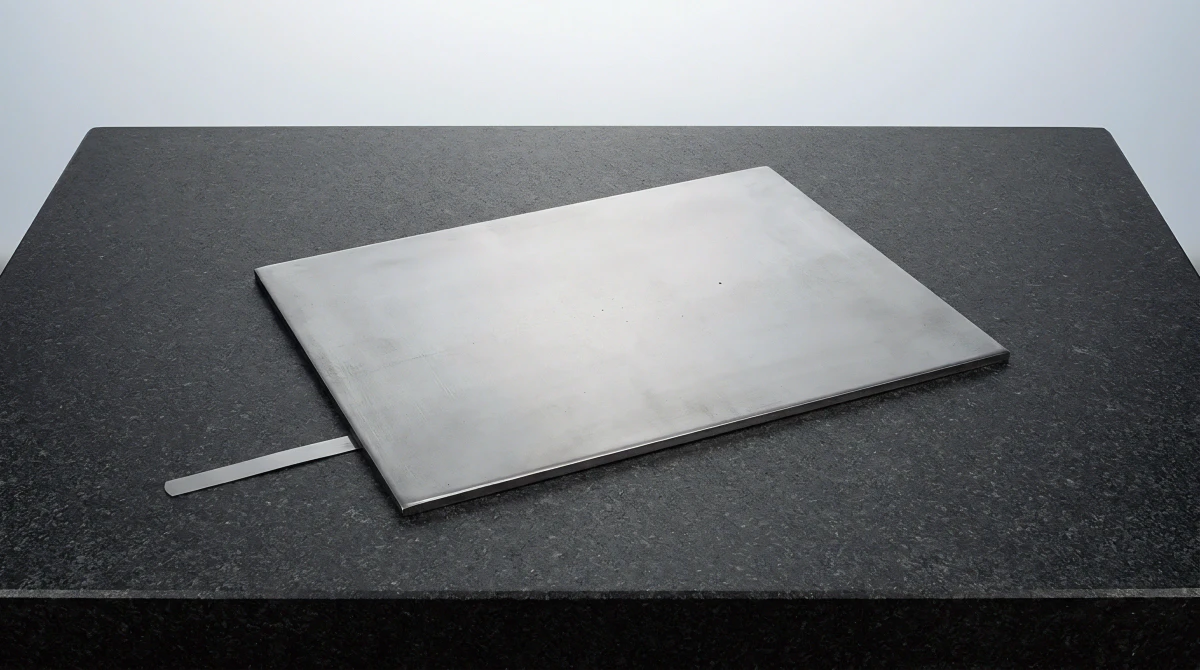
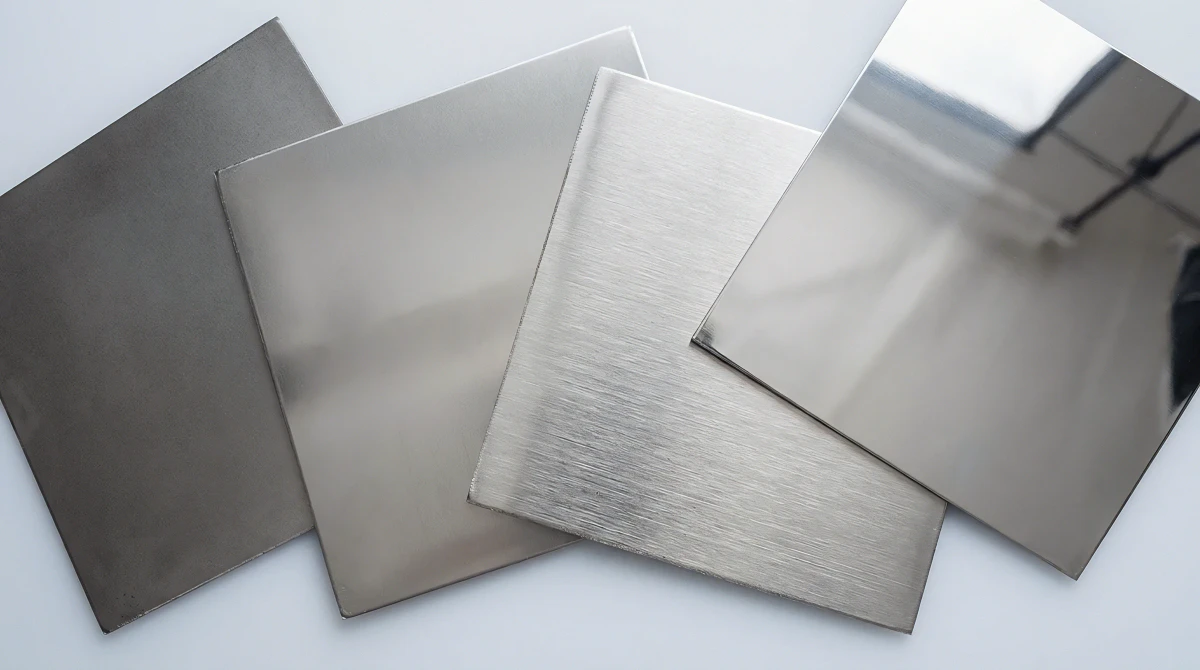
2B is the EN 10088-2 stainless mill finish made by cold rolling, heat treating, pickling and a final skin pass. Euro Inox calls it the most widely used finish, with a smooth, reflective gray sheen. It is the basis for most polished and brushed finishes. Most 316L sheet leaves the mill as 2B.Surface Range
Euro Inox gives 2B a typical Ra of 0.30 to 0.50 µm (12 to 20 µin). The designation names a process, not a roughness. Two suppliers can ship noticeably different roughness under the same code. A process tank delivered above its specified Ra has no repair procedure.Read More
Against 2D and 2R
The skin pass, a light final rolling with highly polished rolls, separates 2B from 2D. Code 2D is smooth and matt, with good ductility, but less smooth than 2B or 2R. Code 2R is bright annealed in an oxygen-free atmosphere after rolling with polished rolls.Flatness Benefit
Euro Inox notes that 2B is common for its corrosion resistance, smoothness and flatness. Euro Inox adds that tension leveling may follow the skin pass. That helps a stainless sheet stay flat before cutting, since the steel flatness tables do not cover stainless.Basis for Polishing
Mechanical finishes such as 2J brushed and 2K satin sit on top of a mill finish. Euro Inox advises starting from the mill finish closest to the final look. That keeps the added polishing steps to a minimum. A 2B sheet is the usual starting point because it is already smooth and reflective.Order Line
A 2B order states the roughness criterion as “Ra max” if a ceiling matters. A limit written “Ra ≤” lets 16 % of readings exceed it.