Bend Radius

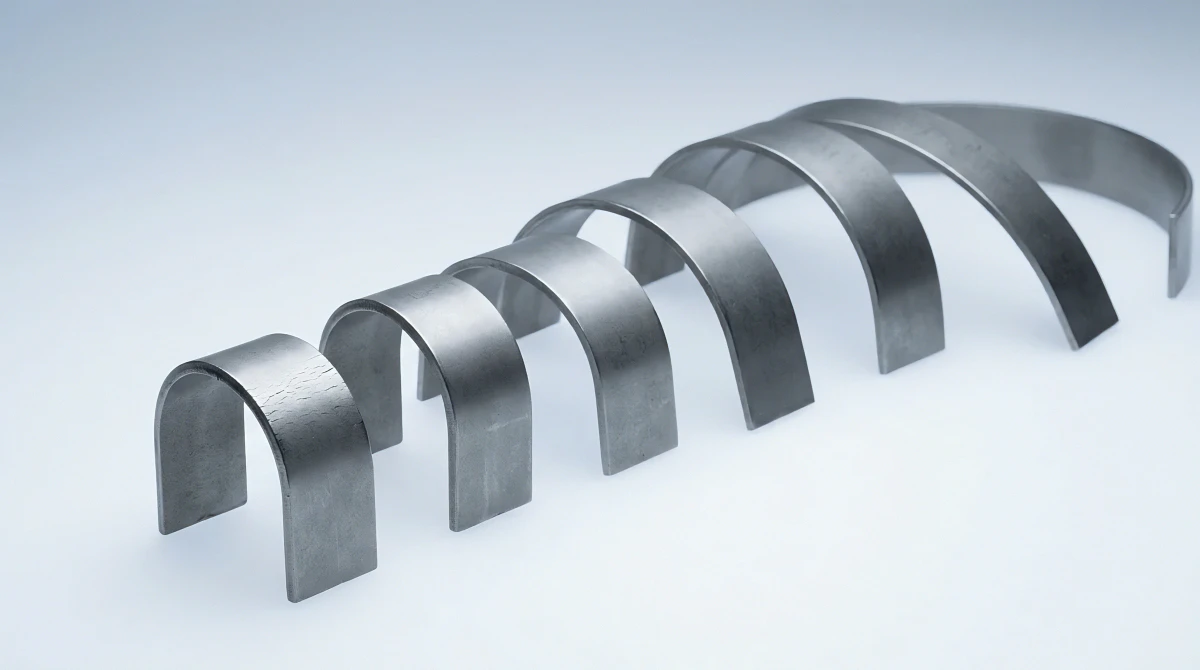
A bend radius is the inside radius a sheet takes at a bend, set by the die opening and punch, not the drawing.

Every Bend Radius article of the Sheet Metal Resources, newest first, each written from published standards, research and makers’ data.

Meaning

A bend radius is the inside radius a sheet takes at a bend, set by the die opening and punch, not the drawing. Each alloy and temper has a smallest radius it survives without cracking. The radius also enters the flat pattern through the bend allowance. A radius on a drawing is therefore a tooling choice as well as a shape.

Minimum by Temper

Minimum inside radii for 5052 are given as multiples of thickness t, and they rise with the temper. For 3.2 mm (0.126 in) sheet, the minimum is 0.5 t in O, 1.5 t in H32 and 3 t in H38. The table gives no direction against the rolling direction and no values between its steps. A drawn radius therefore sits comfortably above the table. A trial bend at the real thickness closes the gap.
Read More

Set by the Die

In air bending, the die opening sets the radius. Bystronic gives about 16 % of the opening for mild steel. Durma gives 20 to 22 % for stainless and 13 to 15 % for 5052. At 90 degrees the natural radius is roughly equal to the thickness, per Wila.

Effect on Springback

A large radius springs back more than a small one. SSAB says springback climbs with steel strength and with the ratio of die width to thickness. Its 0.8 mm (0.031 in) mild steel example springs back 0.5 to 1 degree at a 0.8 mm (0.031 in) radius. At a very large radius it reaches 30 degrees. A part with a generous radius is harder to hold to an angle. A radius below the thickness is drawn without comment for a press brake. It still needs a redesign before a die.

Stainless Note

Euro Inox gives a 5 degree overbend as a starting figure for austenitic stainless. Thickness, bend radius and die opening then move it.

Minimum Bend Radius by Sheet Material and Thickness

Take the minimum bend radius from the maker's table for the exact grade, temper, thickness and bend direction, then draw the radius the die forms.

Minimum Inside Bend Radius Values for Steel SheetSteel makers print the minimum as a multiple of thickness, t, and the multiple rises with strength and with thickness. The two hot-rolled cold-forming ranges below are the clearest published sets; mild cold-rolled steels such as DC01 come with formability figures but, in the makers' datasheets cited here, no printed radius.
High-Strength Steel Sheet S355 and S420 and the Springback It Brings

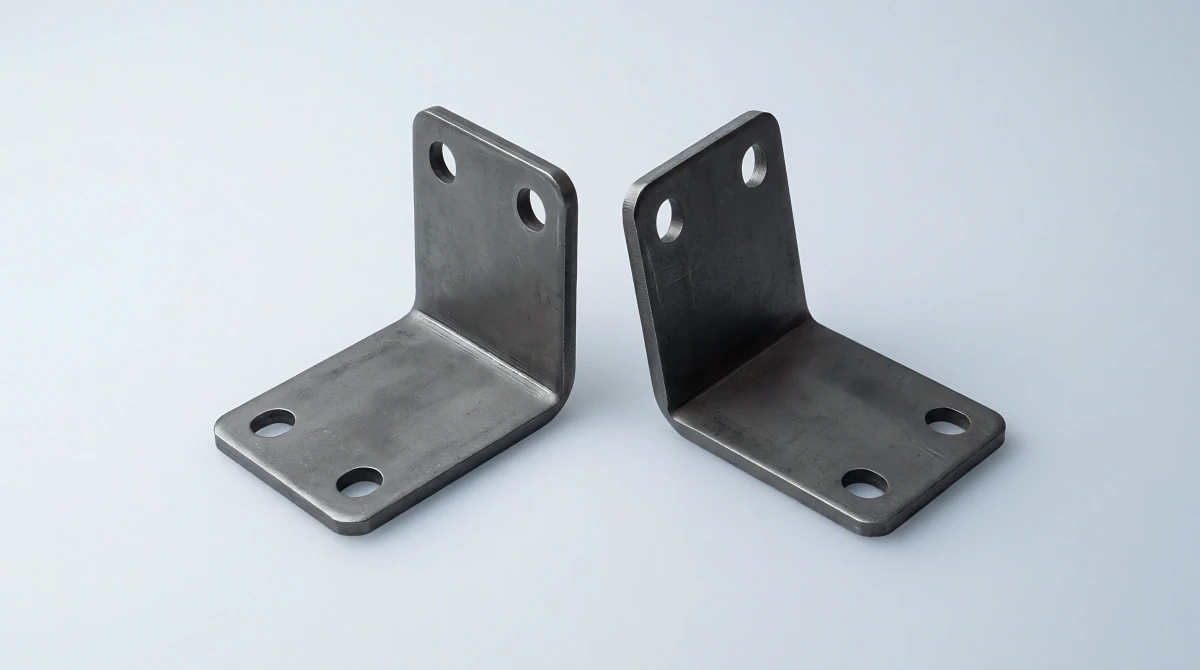
Order S355 or S420 for bent parts as the EN 10149-2 MC grade, bend at the recommended radius, and expect more springback than mild steel.

S355 and S420 Sheet Grades in EN 10149-2 and EN 10025-2High-strength sheet for cut and bent parts comes mainly from two European product standards. EN 10025-2 covers non-alloy structural steels, the S235, S275 and S355 families with the JR, J0 and J2 suffixes that set the impact-test temperature.

5052 H32 Aluminum Sheet for Bending and Welding

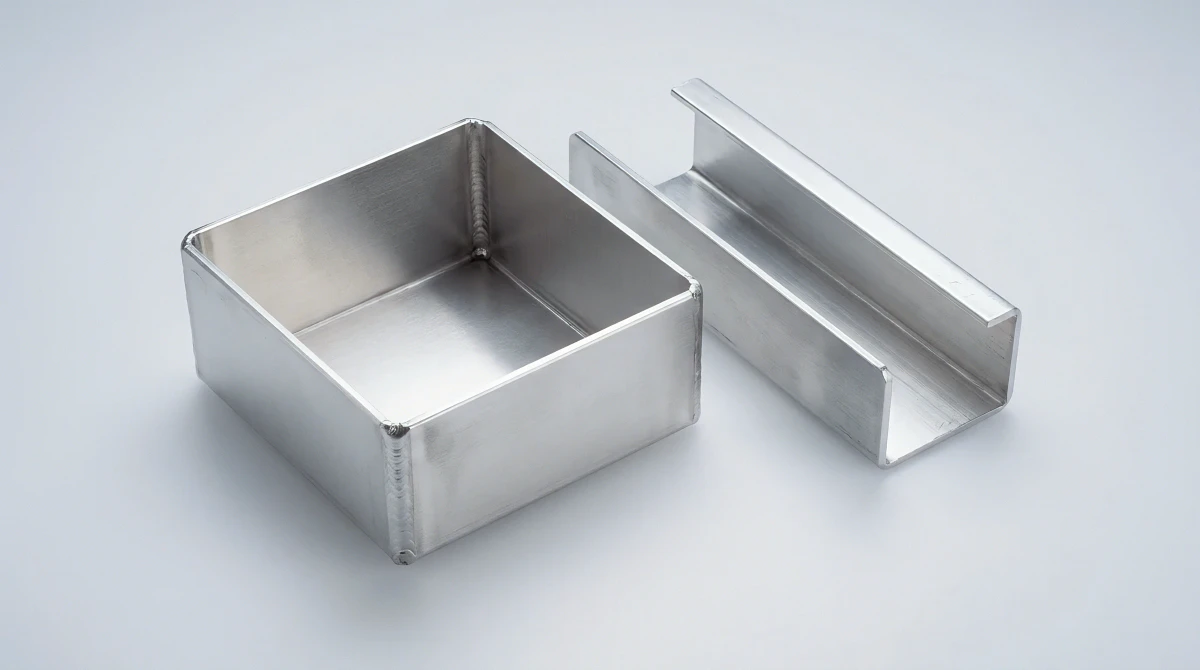
Name the alloy, temper and specification, draw bend radii from a trial bend at the real thickness, and design welded joints to the annealed strength the weld leaves.

What 5052 H32 Offers a Bent and Welded Aluminum PartAlloy 5052 is an aluminum-magnesium alloy, registered in the United States in 1954. The Aluminum Association's international alloy register sets its composition: silicon 0.25 % maximum, iron 0.40 %, copper 0.10 %, manganese 0.10 %, magnesium 2.2 to 2.8 %, chromium 0.15 to 0.35 %, zinc 0.10 %, and 0.05 % each and 0.15 % in total for other elements, with aluminum the remainder.

316L Stainless Steel Sheet for Laser Cutting and Bending

Choose the molybdenum-bearing low-carbon grade for chloride exposure, plan overbend on the brake, and write the finish and weld tint rules on the drawing.

What 316L Sheet Adds Over 304L in a Cut and Bent PartType 316L is Type 316 with the carbon ceiling lowered from 0.08 % to 0.03 % by weight. Both carry 16.0 to 18.0 % chromium, 10.0 to 14.0 % nickel and 2.00 to 3.00 % molybdenum, according to the Cleveland-Cliffs product bulletin for the two types.

Request a Sheet Metal Quote

Send the 2D drawing and the 3D file, with the quantity and the stage of the project. An engineer replies within 1 working day.

The quote form, the mutual NDA and the private folder for your files are on Protolis Atelier, with Sheet Metal chosen.

Request a Quote