Punch

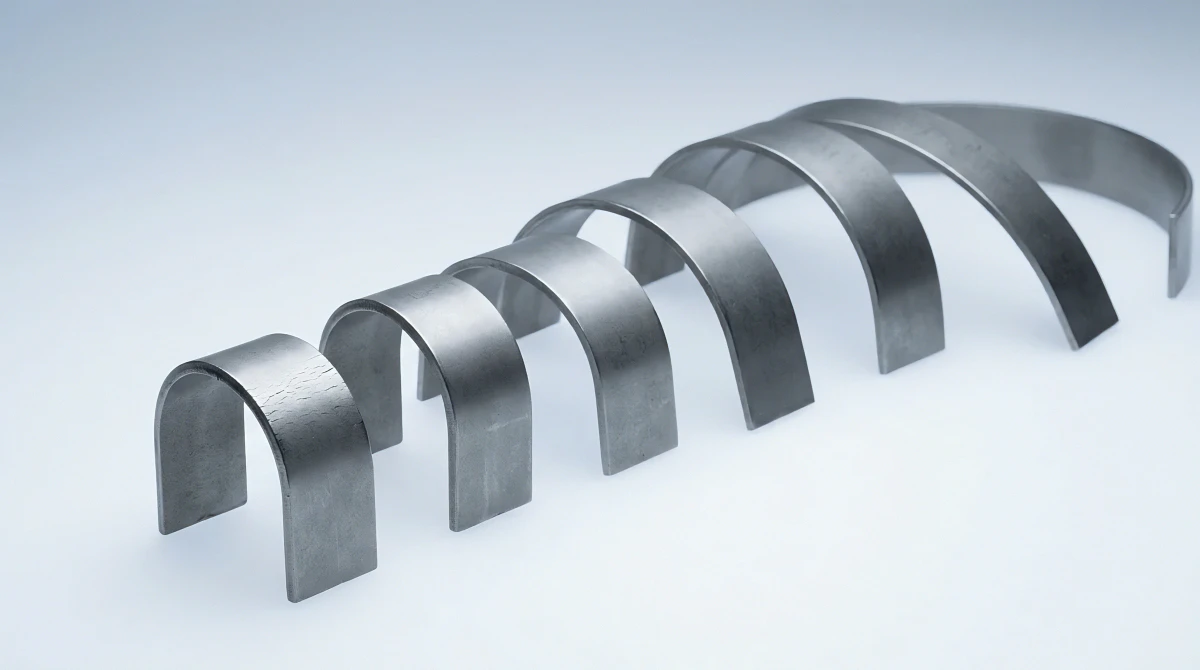
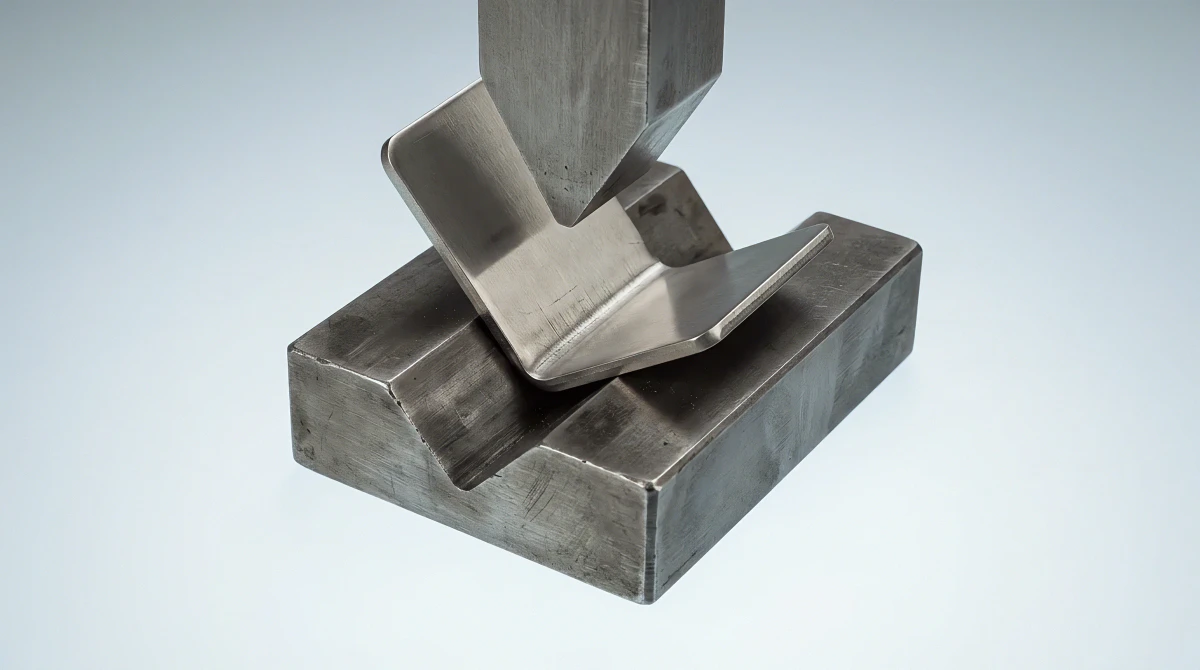
A punch is the upper tool of a press brake or die, which presses the sheet into the V or cuts through it.

Every Punch article of the Sheet Metal Resources, newest first, each written from published standards, research and makers’ data.

Meaning

A punch is the upper tool of a press brake or die, which presses the sheet into the V or cuts through it. On a brake, its tip radius works with the die opening to form the inside radius. In a progressive die, a punch makes each hole and wears as it runs. Its condition shows in the radius, the burr and the hole.

Tip Radius

Wila advises a punch tip radius as close to the material’s natural radius as possible without exceeding it. The die opening sets the inside radius in air bending. A punch nose has a fixed radius, so a drawing writes the inside radius as a number, not as “tight.”
Read More

Thickness Effect

Inside radius is set by the punch, while the sheet’s thickness changes how far the metal stretches. Flange length and final angle therefore shift with the delivered thickness. The first formed piece shows the result on the actual sheet.

Die Punches

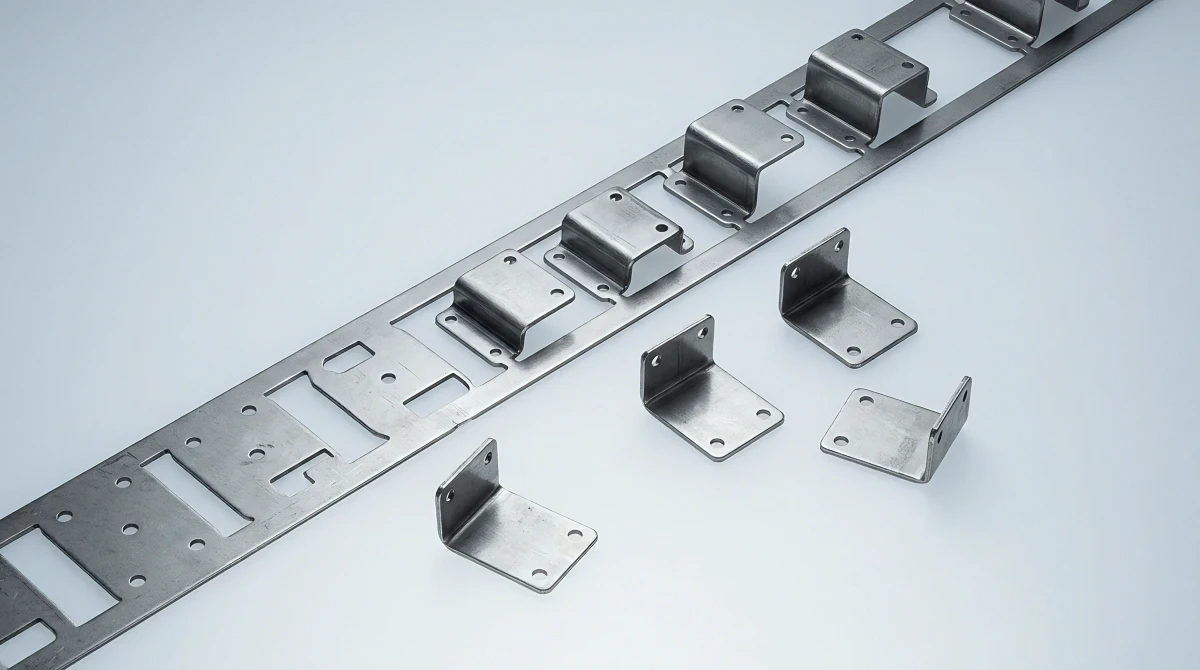
In a progressive die, small holes risk punch breakage. A punched hole too small for its thickness risks the punch, and a die engineer sizes holes to the sheet before the die is drawn. Punches dull as the die runs, so clearances open and the burr grows. Sharpening restores the edge but changes the clearance and the burr side.

Precision

Bystronic gives a tool tolerance of about 0.01 mm (0.0004 in) for press brake tooling. The shop records die width and punch radius with the K-factor for each part. A repeat order then uses the same punch, or the flat pattern changes.
Inserting Self-Clinching Fasteners in Sheet Metal Step by Step

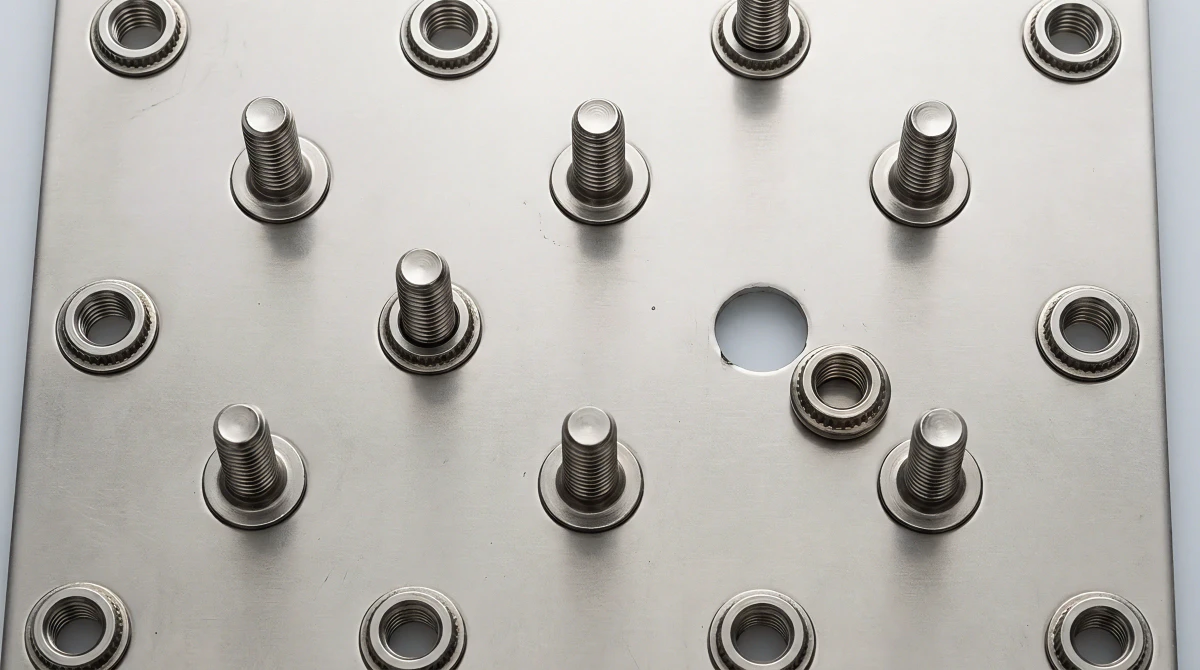
Cut the hole to size without deburring, check the sheet is soft enough, finish the panel, then squeeze the nut in parallel until its head meets the sheet.

How a Self-Clinching Nut Locks Into Thin SheetInstallation takes three moves. First a hole of the specified size is punched or drilled, the nut's shank is placed in it, and a press squeezes nut and sheet between parallel surfaces until the head meets the sheet.

Minimum Bend Radius by Sheet Material and Thickness

Take the minimum bend radius from the maker's table for the exact grade, temper, thickness and bend direction, then draw the radius the die forms.

Minimum Inside Bend Radius Values for Steel SheetSteel makers print the minimum as a multiple of thickness, t, and the multiple rises with strength and with thickness. The two hot-rolled cold-forming ranges below are the clearest published sets; mild cold-rolled steels such as DC01 come with formability figures but, in the makers' datasheets cited here, no printed radius.

Bend Angle and Flange Length Tolerance on Press Brake Parts

Set the bend angle tolerance from the position the flange tip has to reach, and control sheet thickness, die width and the flat pattern behind it.

Bend Angle and Flange Length Tolerance ValuesThere is no single tolerance for bent sheet metal. Durmapress says so plainly and offers planning ranges per operation instead, warning that they are a guide only and move with the material, thickness, size of part, machine, state of the tooling, number of operations and the way parts are inspected.

High-Strength Steel Sheet S355 and S420 and the Springback It Brings

Order S355 or S420 for bent parts as the EN 10149-2 MC grade, bend at the recommended radius, and expect more springback than mild steel.

S355 and S420 Sheet Grades in EN 10149-2 and EN 10025-2High-strength sheet for cut and bent parts comes mainly from two European product standards. EN 10025-2 covers non-alloy structural steels, the S235, S275 and S355 families with the JR, J0 and J2 suffixes that set the impact-test temperature.

Progressive Die Stamping After Laser Cut and Bent Sheet Metal Parts

A progressive die makes parts in minutes but takes months to build and wants a design that has stopped, so quantity and design stability choose between die and laser.

What Changes When a Part Moves From Laser and Brake to a DieIn laser and brake work, a flat blank is cut by a beam from a program and bent on a press brake with standard tooling, so a part exists the day the drawing and the sheet exist. In progressive stamping, a continuous strip passes through one die set with several stations.

Press Brake Bending of Sheet Metal From Die Opening to Final Angle

A press brake bend is decided by the die opening, which sets radius, flange length, springback and the flat pattern, so the first piece carries every assumption of the lot.

How a Press Brake Forms a Bend in AirMost sheet metal is bent by air forming. The punch pushes the sheet into a V-shaped die, and the sheet touches only three points: the two shoulders of the die and the tip of the punch.

Cold Rolled Steel Sheet Thickness Tolerance Under EN 10131

Choose the tolerance column by what the part does with a thickness error, and write the strength class and column on the order.

What EN 10131 Allows on the Thickness of a Cold Rolled SheetEN 10131 covers cold rolled flat products of uncoated and electrolytically coated steel, and ArcelorMittal's tolerance tables reproduce its thickness limits as guarantees. The tables run from 0.35 mm to 3.00 mm and apply per nominal thickness band, per width class and per yield strength class.

Request a Sheet Metal Quote

Send the 2D drawing and the 3D file, with the quantity and the stage of the project. An engineer replies within 1 working day.

The quote form, the mutual NDA and the private folder for your files are on Protolis Atelier, with Sheet Metal chosen.

Request a Quote