Material Lot

A material lot is the sheet or coil delivered under one heat and one certificate, to which a batch of parts is traced.

Every Material Lot article of the Sheet Metal Resources, newest first, each written from published standards, research and makers’ data.

Meaning

A material lot is the sheet or coil delivered under one heat and one certificate, to which a batch of parts is traced. Two lots of one grade are close but not identical, and a repeat order can bring a new heat from a new mill. The lot is therefore recorded with every job that uses it.

Certificate and Remnant

A lot has its certificate, and the parts cut from it share its record. A clean remnant can be kept for a later order of the same grade and thickness. Once separated from its certificate, a remnant is no longer usable for traced parts.
Read More

Effect on Bending

For parts that bend, the lot shows up in the angle. Two coils of the same grade differ in yield, so a second lot can open a bend by half a degree. Cut in two sittings from two lots, one batch can show two springback values a fraction of a degree apart. The first piece of the second lot is checked like the first piece of the first.

Shop Record

The press brake shop records the K-factor with the material lot, die and punch. A repeat order holds the same value, or the flat pattern changes silently. On a running die, a new coil lot calls for a re-check of the part.

Releases

Each release of a batch is a new setup and a new material lot risk. An order that splits a quantity therefore states how releases are cut. The job record keeps the lot beside the nest and the first-piece measurement.
Sheet Metal Inspection From First Article to Batch Release

Measure the first part against every requirement, then release each lot on a defined sample, with weld, coating and hardware checks tied to their standards.

First Article Inspection for Sheet Metal PartsA first article inspection measures the first part made by the production process against every requirement on the drawing and records the result. In aerospace the practice has its own standard, SAE AS9102, whose scope is to establish the baseline requirements for performing and documenting a first article inspection.

Inserting Self-Clinching Fasteners in Sheet Metal Step by Step

Cut the hole to size without deburring, check the sheet is soft enough, finish the panel, then squeeze the nut in parallel until its head meets the sheet.

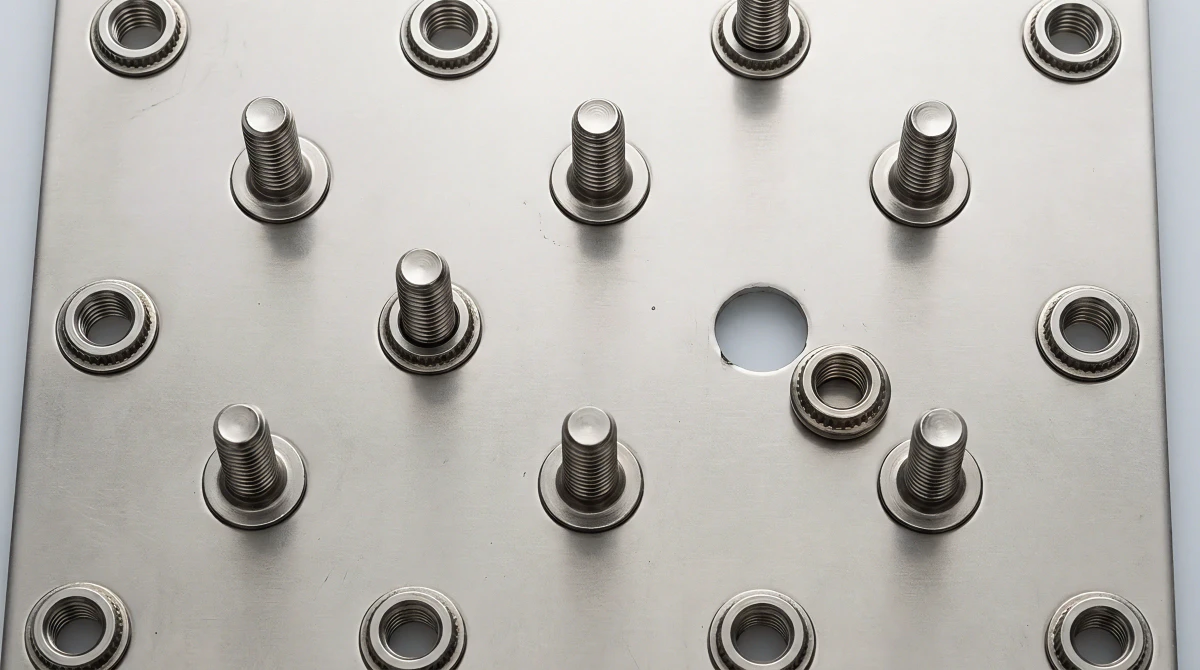
How a Self-Clinching Nut Locks Into Thin SheetInstallation takes three moves. First a hole of the specified size is punched or drilled, the nut's shank is placed in it, and a press squeezes nut and sheet between parallel surfaces until the head meets the sheet.

Bend Angle and Flange Length Tolerance on Press Brake Parts

Set the bend angle tolerance from the position the flange tip has to reach, and control sheet thickness, die width and the flat pattern behind it.

Bend Angle and Flange Length Tolerance ValuesThere is no single tolerance for bent sheet metal. Durmapress says so plainly and offers planning ranges per operation instead, warning that they are a guide only and move with the material, thickness, size of part, machine, state of the tooling, number of operations and the way parts are inspected.

ISO 2768 and DIN 6930 General Tolerances for Bent Sheet Metal Parts

ISO 2768-1 covers sheet metal parts by size class; on a bent part its angular row decides fit, and DIN 6930-2 is written for stamped steel parts only.

What ISO 2768-1 Covers on a Sheet Metal DrawingISO 2768-1, first edition 1989-11-15, sets general tolerances for linear and angular dimensions without individual tolerance indications, in four classes. Its scope names sheet metal directly: it applies to the dimensions of parts produced by metal removal or parts formed from sheet metal.

Progressive Die Stamping After Laser Cut and Bent Sheet Metal Parts

A progressive die makes parts in minutes but takes months to build and wants a design that has stopped, so quantity and design stability choose between die and laser.

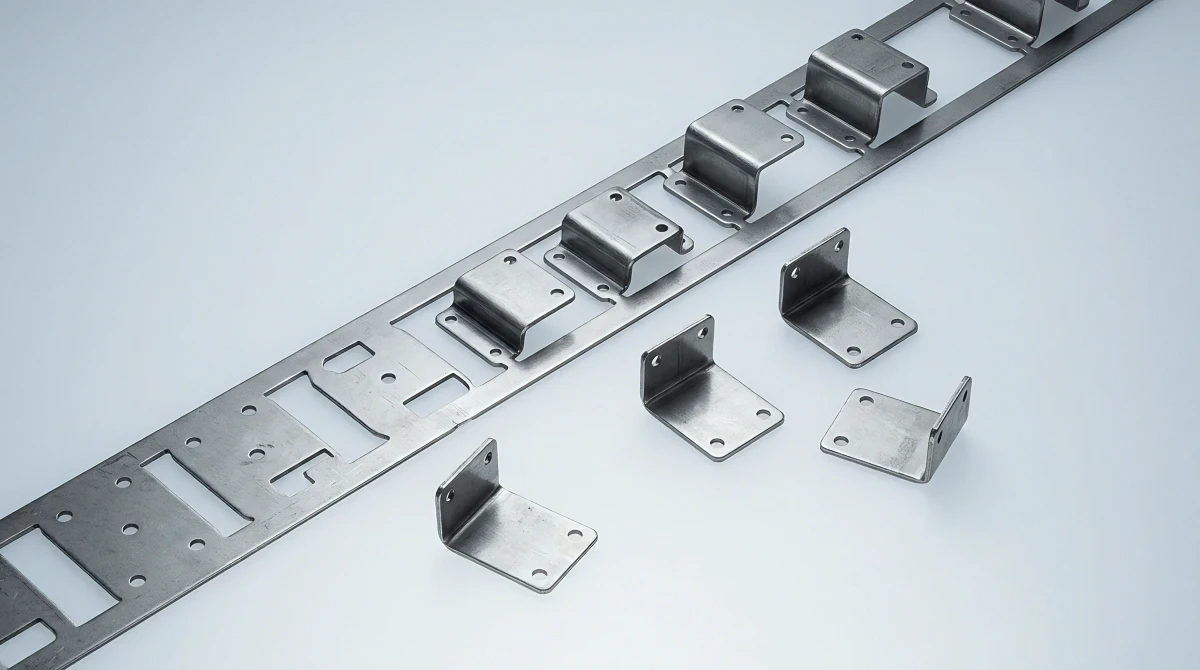
What Changes When a Part Moves From Laser and Brake to a DieIn laser and brake work, a flat blank is cut by a beam from a program and bent on a press brake with standard tooling, so a part exists the day the drawing and the sheet exist. In progressive stamping, a continuous strip passes through one die set with several stations.

Press Brake Bending of Sheet Metal From Die Opening to Final Angle

A press brake bend is decided by the die opening, which sets radius, flange length, springback and the flat pattern, so the first piece carries every assumption of the lot.

How a Press Brake Forms a Bend in AirMost sheet metal is bent by air forming. The punch pushes the sheet into a V-shaped die, and the sheet touches only three points: the two shoulders of the die and the tip of the punch.

Request a Sheet Metal Quote

Send the 2D drawing and the 3D file, with the quantity and the stage of the project. An engineer replies within 1 working day.

The quote form, the mutual NDA and the private folder for your files are on Protolis Atelier, with Sheet Metal chosen.

Request a Quote