Meaning
Special tolerance is the tighter of the two columns in EN 10131, EN 10143 and EN 10051, named on the order in place of normal. It narrows thickness, width, length and flatness bands. In the EN 10131 thickness table it is about two thirds of the normal band. The choice is made at enquiry, since the order is the only place it is recorded.Size of the Gain
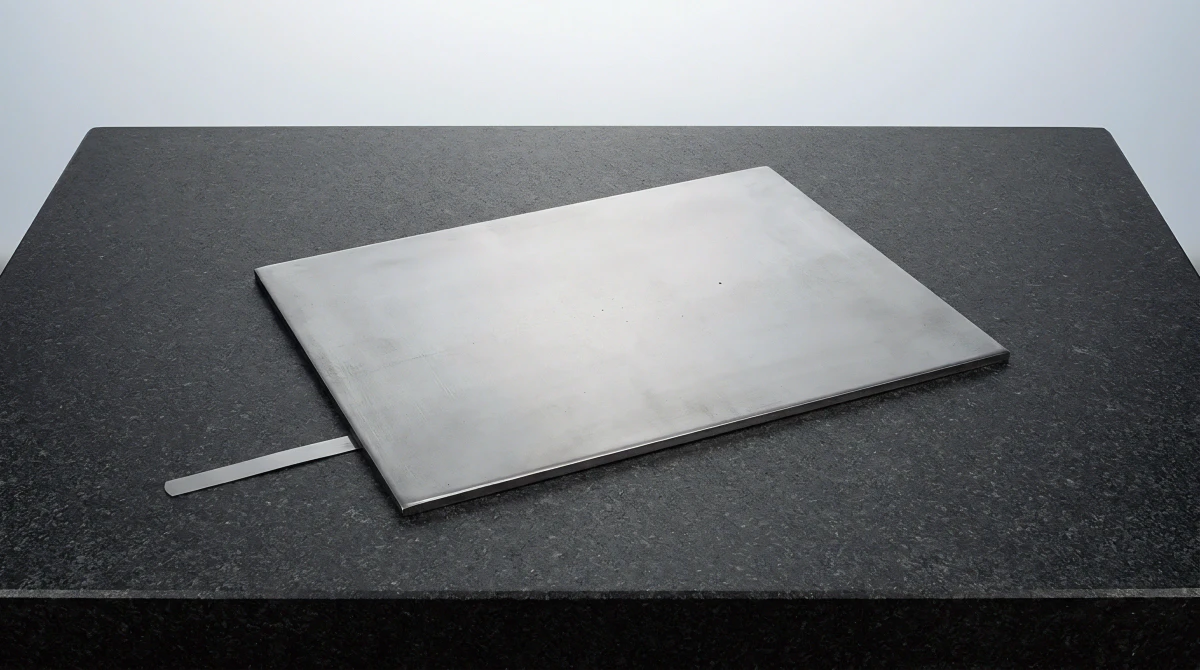
For 2.00 mm (0.079 in) soft cold rolled steel up to 1,200 mm (47 in) wide, normal is ±0.10 mm (±0.004 in). Special is ±0.060 mm (±0.0024 in), 60 % of normal. Width tolerance drops from 0 to +4 mm (0 to +0.16 in) to 0 to +2 mm (0 to +0.08 in). Length tolerance halves. EN 10131 flatness falls by about half, from 8 to 4 mm (0.31 to 0.16 in) on a typical sheet.Read More
When It Pays
Special pays when a joint, a slot-and-tab fit or a press-fit insert depends on the sheet being close to nominal. Normal serves when the thickness only carries load or sets stiffness. A simple test asks what a ±0.10 mm (±0.004 in) error does to every assembled dimension. If they all stay in tolerance, normal is enough.Strength Effect
The special band for the hardest class is as wide as the normal band for the softest. At 1.6 to 2.0 mm (0.063 to 0.079 in), both are ±0.10 mm (±0.004 in). A high-strength grade on special tolerance therefore carries a soft grade’s normal band.Coated Sheet
EN 10143 has its own columns. At 1.0 to 1.2 mm (0.04 to 0.05 in) the special band is ±0.050 mm (±0.002 in).