Meaning
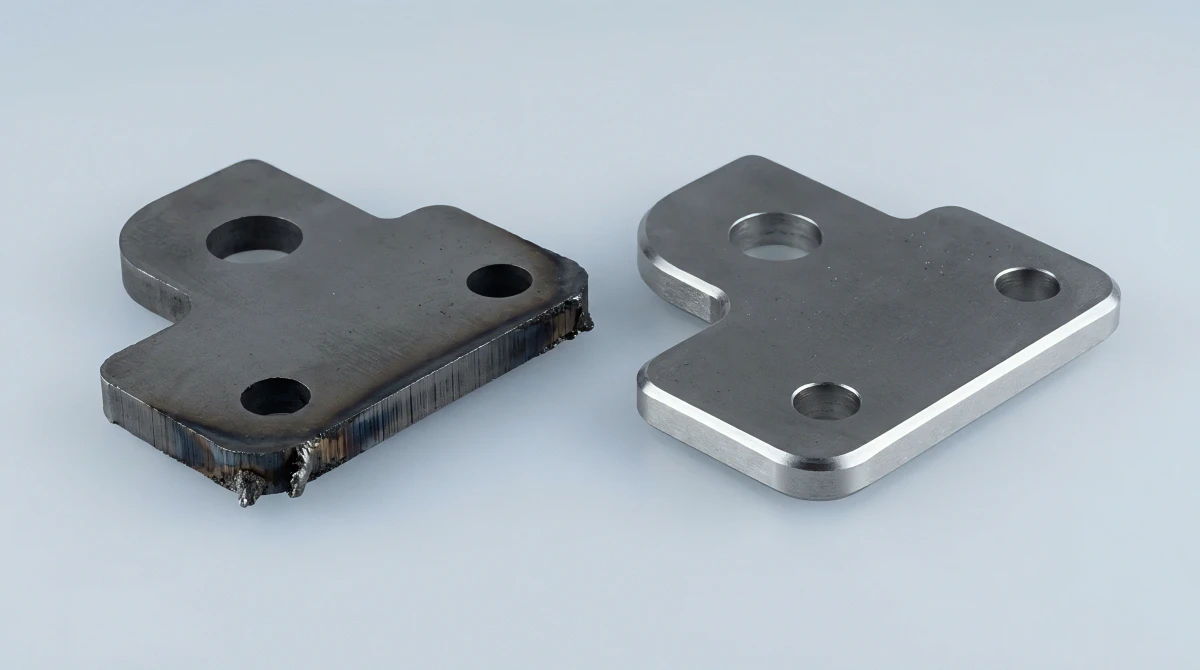
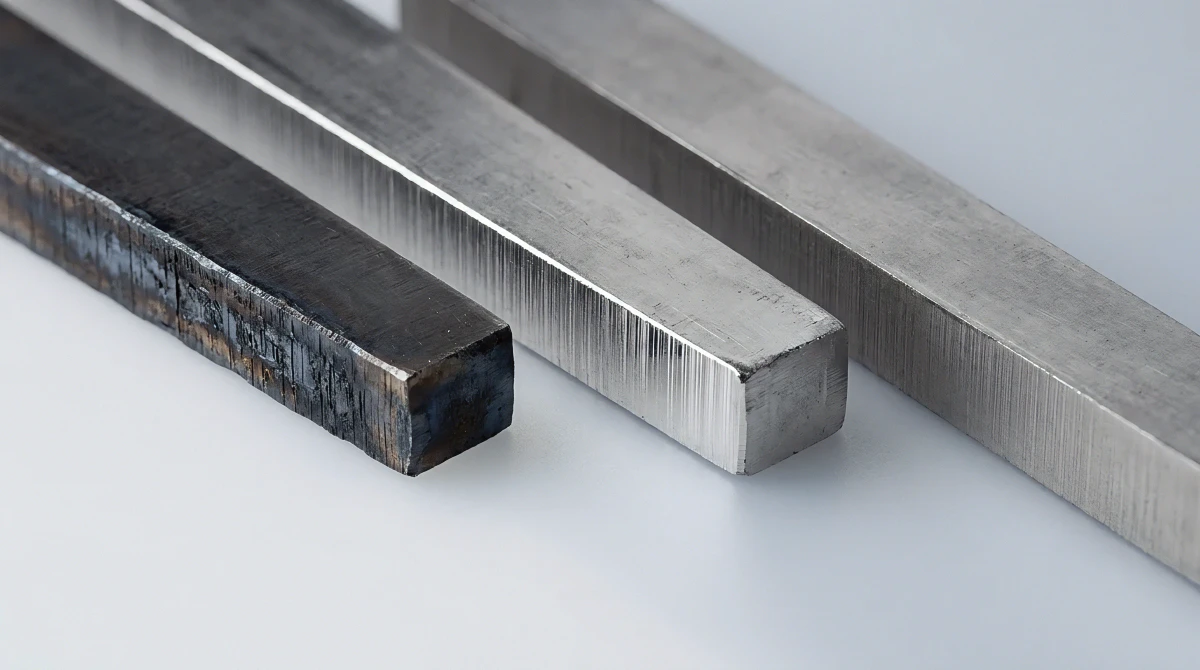
Dross is the beaded residue of melted metal left clinging to the lower edge of a thermal cut. It is thicker and harder to remove than a burr. It comes from too little gas pressure, too slow a cut or the wrong gas. ISO 9013 treats it apart from its two edge values.Causes
Linde notes that too much oxygen pressure drives sideways burning and heavy dross. In a nitrogen cut on stainless, oxygen contamination leaves dross that is hard to remove. Air Liquide says air leaves more dross on aluminum than nitrogen does. Shop experience in All About Industries says lowering oxygen by 0.1 bar (1.5 psi) often removes burnt corners.Read More
In ISO 9013
The standard lists dross, or melted drops at the lower edge, as an additional characteristic. It sits outside the squareness and roughness ranges. A cut can therefore meet its ranges and still carry dross the drawing has to address.Effect on Size
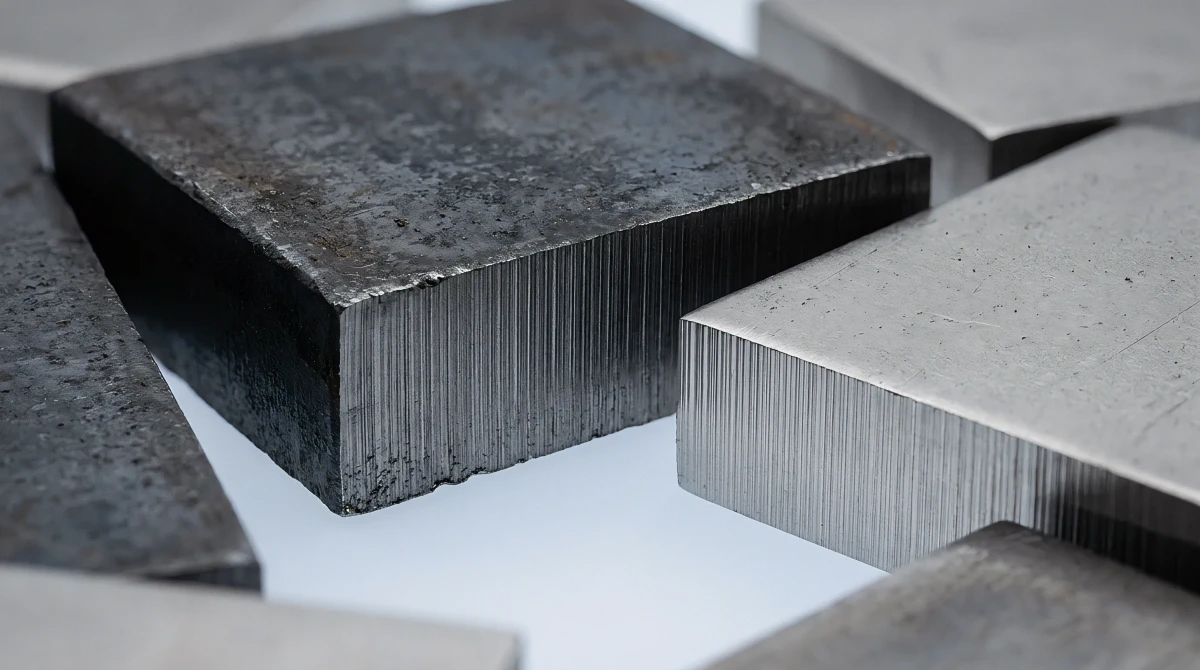
ISO 9013 measures actual dimensions on clean cut surfaces, not on a surface covered with dross. A part with dross on a mating edge therefore reads differently from the same part cleaned. The size rule assumes the residue is gone.Where to Look
The bottom edge is the first place to check, since dross and burr collect there. Inside corners and small holes come next, where heat builds up. A first-piece check catches a gas or speed setting that leaves dross before the batch runs. The order states whether dross is removed and how the edge should feel.