Corrosion

Corrosion is the attack of a sheet part by its environment, resisted by the metal's grade and by coatings, cleaning and separation.

Every Corrosion article of the Sheet Metal Resources, newest first, each written from published standards, research and makers’ data.

Meaning

Corrosion is the attack of a sheet part by its environment, resisted by the metal’s grade and by coatings, cleaning and separation. For stainless and aluminum, the alloy carries most of the resistance. For carbon steel, a zinc or powder layer does. A weld, a crevice or a stray particle can undo either.

Grade First

Euro Inox places 316 on coastal or heavy industrial sites and 304 on less demanding exteriors. The 2.00 to 3.00 % molybdenum in 316 gives it better chloride and pitting resistance. Cleveland-Cliffs rates 316 and 316L useful in sulfuric acid below 5 % up to 60 °C (150 °F). Those statements describe the alloy, not a part with weld tint, an embedded iron particle or a crevice.
Read More

Weld Zone

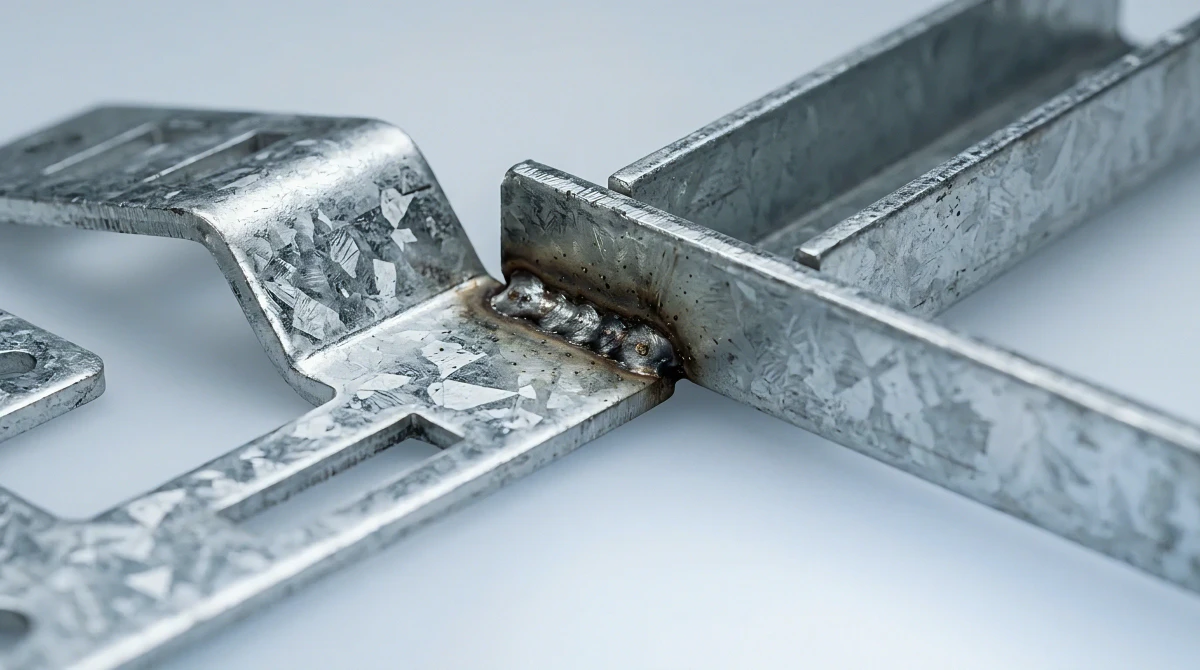
The low carbon of 316L keeps chromium carbides from forming in the heat-affected zone. That precipitation is what opens a weld to intergranular corrosion. A 316L part that must resist chlorides also carries a tint rule and a cleaning step on its drawing.

Zinc Life

GalvInfo states that the life of a galvanized coating is about linear with its weight, measured as time to 5 % red rust. G60 lasts about twice as long as G30, and G90 about 50 % longer than G60.

Coated Parts

IGP lists 500 to 1,000 hours of condensation and salt spray resistance for its powder, depending on pretreatment. Those hours qualify the powder system, so a lot is judged on gloss, film and adhesion instead. A galvanized part headed outdoors needs a powder rated for outdoor use.

Mixed Metals

Stainless is more noble than zinc, galvanized steel and aluminum, per Euro Inox. Moisture then corrodes the less noble metal unless the two are separated by nylon or neoprene.

Cleaning

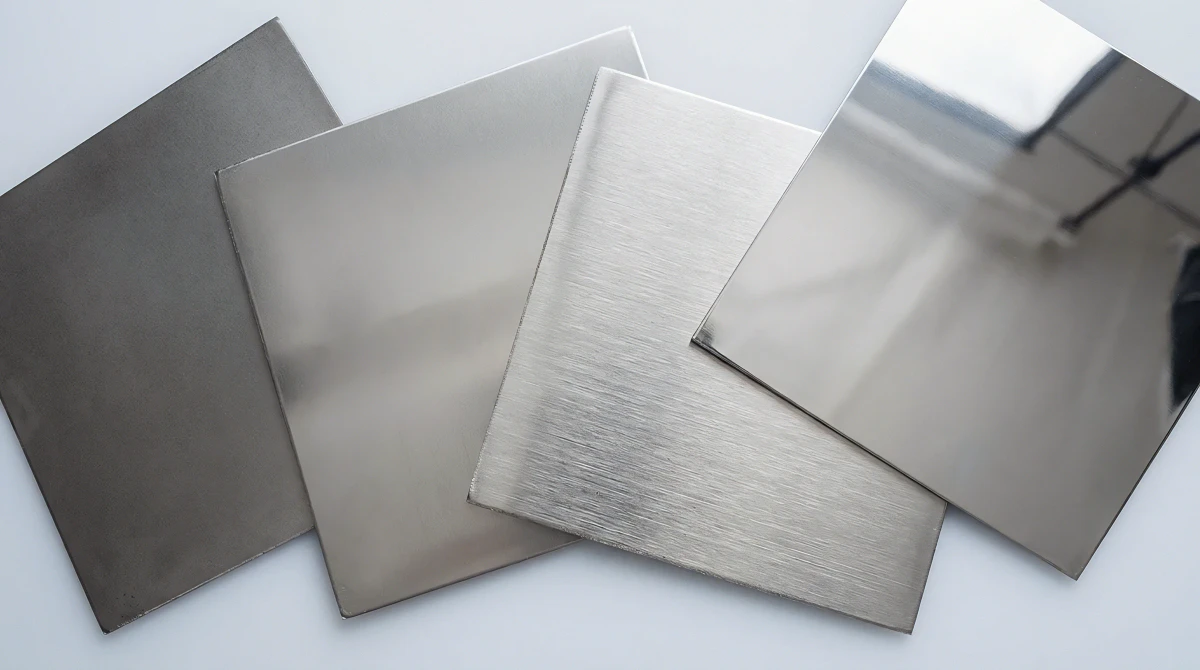
Carbon steel tools and wire wool contaminate stainless, and chloride cleaners can damage it permanently. Euro Inox lists electropolishing as improving corrosion resistance and ease of cleaning.
Sheet Metal Inspection From First Article to Batch Release

Measure the first part against every requirement, then release each lot on a defined sample, with weld, coating and hardware checks tied to their standards.

First Article Inspection for Sheet Metal PartsA first article inspection measures the first part made by the production process against every requirement on the drawing and records the result. In aerospace the practice has its own standard, SAE AS9102, whose scope is to establish the baseline requirements for performing and documenting a first article inspection.

Inserting Self-Clinching Fasteners in Sheet Metal Step by Step

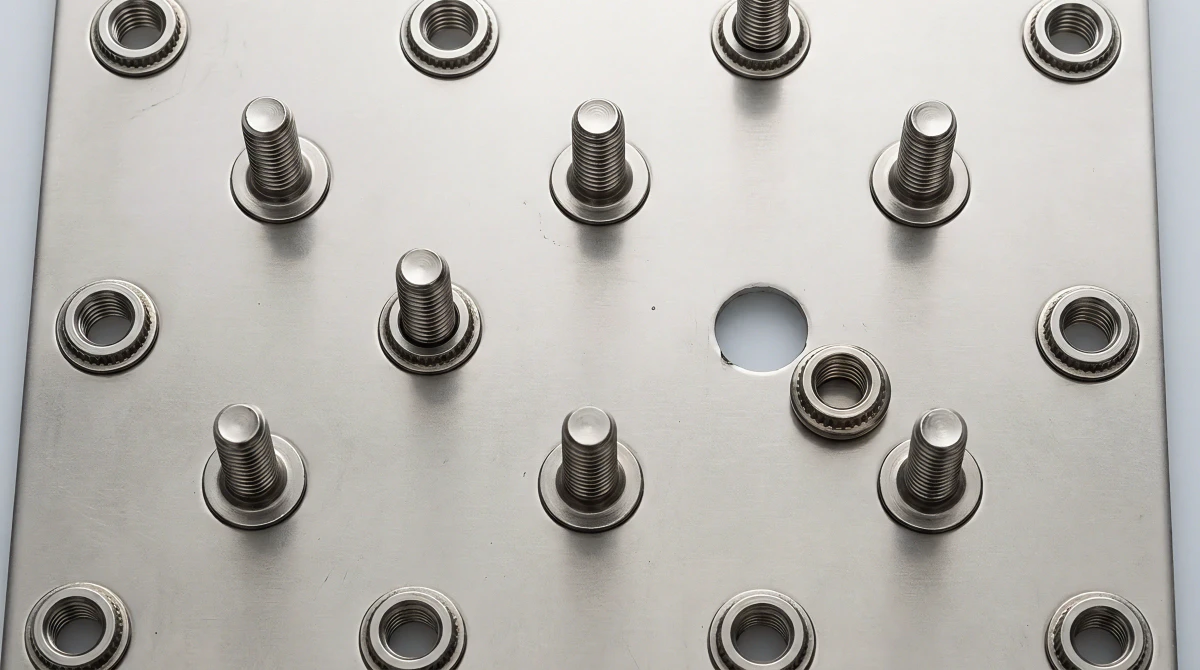
Cut the hole to size without deburring, check the sheet is soft enough, finish the panel, then squeeze the nut in parallel until its head meets the sheet.

How a Self-Clinching Nut Locks Into Thin SheetInstallation takes three moves. First a hole of the specified size is punched or drilled, the nut's shank is placed in it, and a press squeezes nut and sheet between parallel surfaces until the head meets the sheet.

ISO 1461 Hot-Dip Galvanizing of Fabricated Steel Parts

ISO 1461 sets zinc thickness by steel thickness, measures it away from edges, and expects cut edges ground and parts bent before galvanizing.

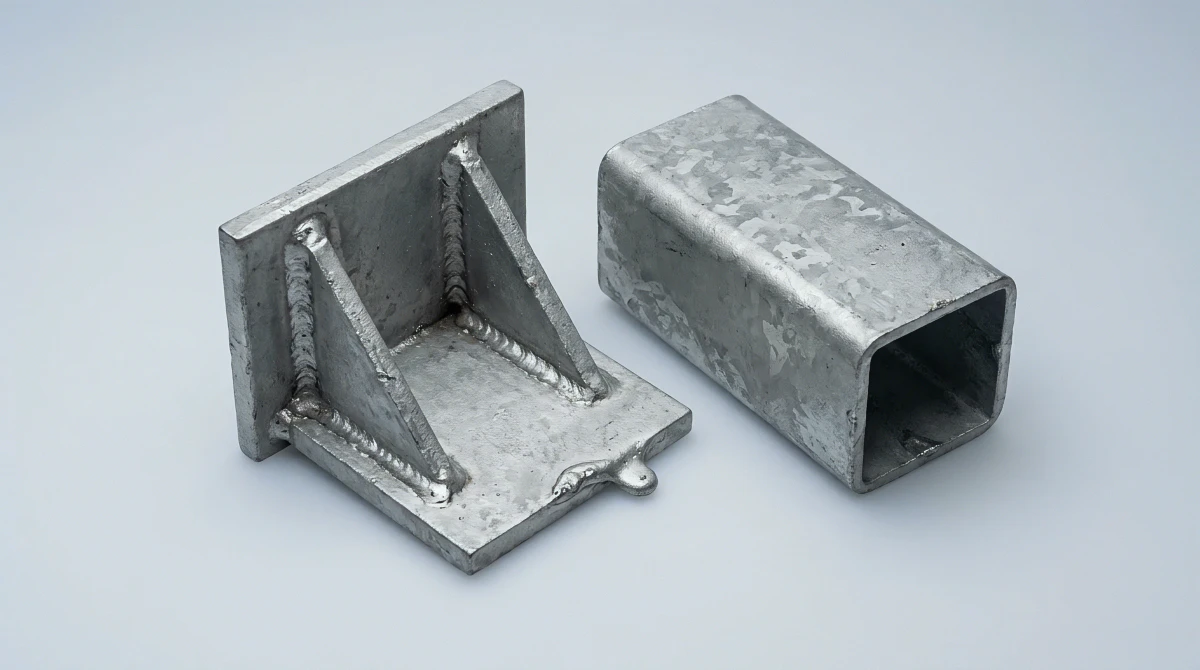
What ISO 1461 Covers for Cut and Bent Steel PartsISO 1461:2022, the fourth edition, sets out the properties and test methods of zinc coatings formed when finished iron and steel articles, some castings included, are dipped in molten zinc holding at most 2 % of other metals. Its key word is fabricated: the parts are cut, formed and welded first and galvanized afterward in batches, by a company the standard now defines as the galvanizer.

Cold Rolled DC01 and Hot Rolled S235 Steel Sheet for Cut and Bent Parts

Choose DC01 for thin formed parts that need tight thickness, flatness and a clean surface, and S235 for thicker load-bearing parts, then name the standard on the order.

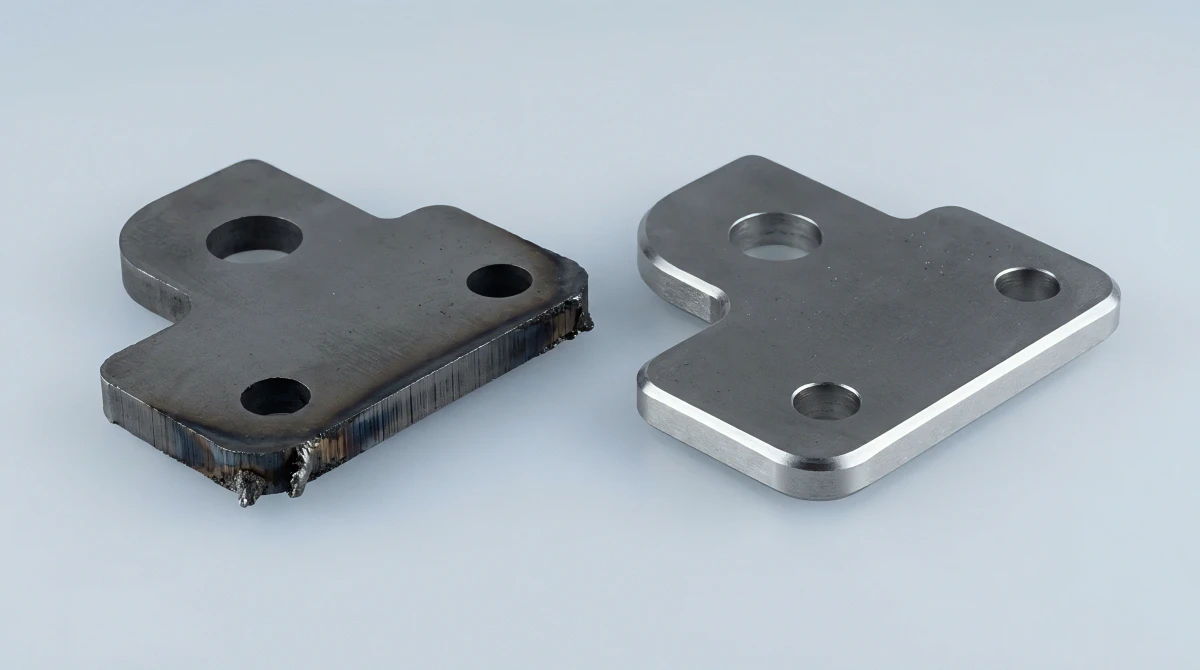
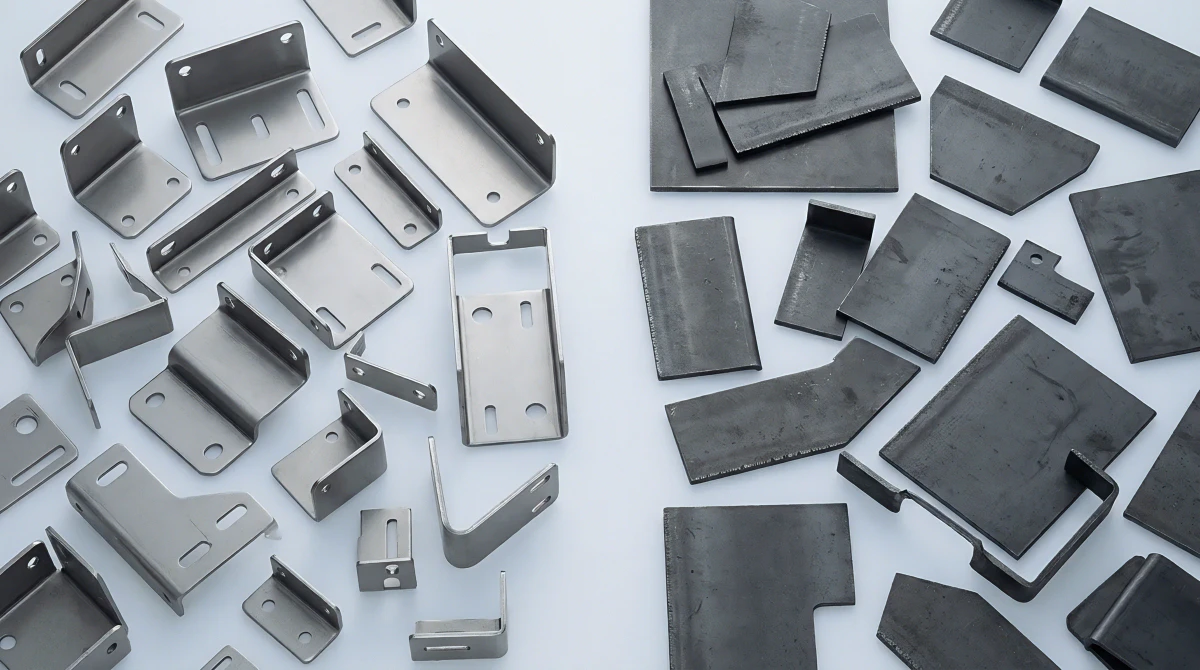
DC01 and S235 Compared for Laser Cut and Bent Sheet PartsDC01 is a cold-rolled non-alloy mild steel for cold forming under EN 10130, material number 1.0330, which ArcelorMittal describes as having a guaranteed maximum yield and tensile strength, a guaranteed minimum elongation and good formability. S235 is a hot-rolled carbon-manganese structural steel under EN 10025-2, described by the same mill as having a guaranteed minimum yield and tensile strength and satisfactory ductility, in JR, J0 and J2 versions that differ in impact-test temperature.

Powder Coated Sheet Metal Batch From Pretreatment to Cure and Inspection

A powder coating cures in minutes but depends on pretreatment, rack mass and film allowance, and a lot is judged on gloss, film and adhesion, not corrosion hours.

The Stages a Coated Batch Passes ThroughA batch of sheet metal parts goes through six stages on its way from the bare part to a coated one: pretreatment, drying, masking and hanging, application, cure, and cooling and packing. Each stage has a condition the powder maker states, and each has its own place in the schedule.

Galvanized Steel Sheet Coating Weight Designations for Cut and Welded Parts

Read the coating designation as a minimum zinc mass over both faces, name the standard and test basis, and plan ventilation for cutting and welding.

What a Coating Weight Designation Says About the SheetA designation states the minimum mass of zinc, or zinc alloy, on the sheet and the units it is stated in. G90 means hot-dip galvanized, with a triple spot test average of at least 0.90 ounce per square foot, counted over both sides together.

316L Stainless Steel Sheet for Laser Cutting and Bending

Choose the molybdenum-bearing low-carbon grade for chloride exposure, plan overbend on the brake, and write the finish and weld tint rules on the drawing.

What 316L Sheet Adds Over 304L in a Cut and Bent PartType 316L is Type 316 with the carbon ceiling lowered from 0.08 % to 0.03 % by weight. Both carry 16.0 to 18.0 % chromium, 10.0 to 14.0 % nickel and 2.00 to 3.00 % molybdenum, according to the Cleveland-Cliffs product bulletin for the two types.

Request a Sheet Metal Quote

Send the 2D drawing and the 3D file, with the quantity and the stage of the project. An engineer replies within 1 working day.

The quote form, the mutual NDA and the private folder for your files are on Protolis Atelier, with Sheet Metal chosen.

Request a Quote