Panel

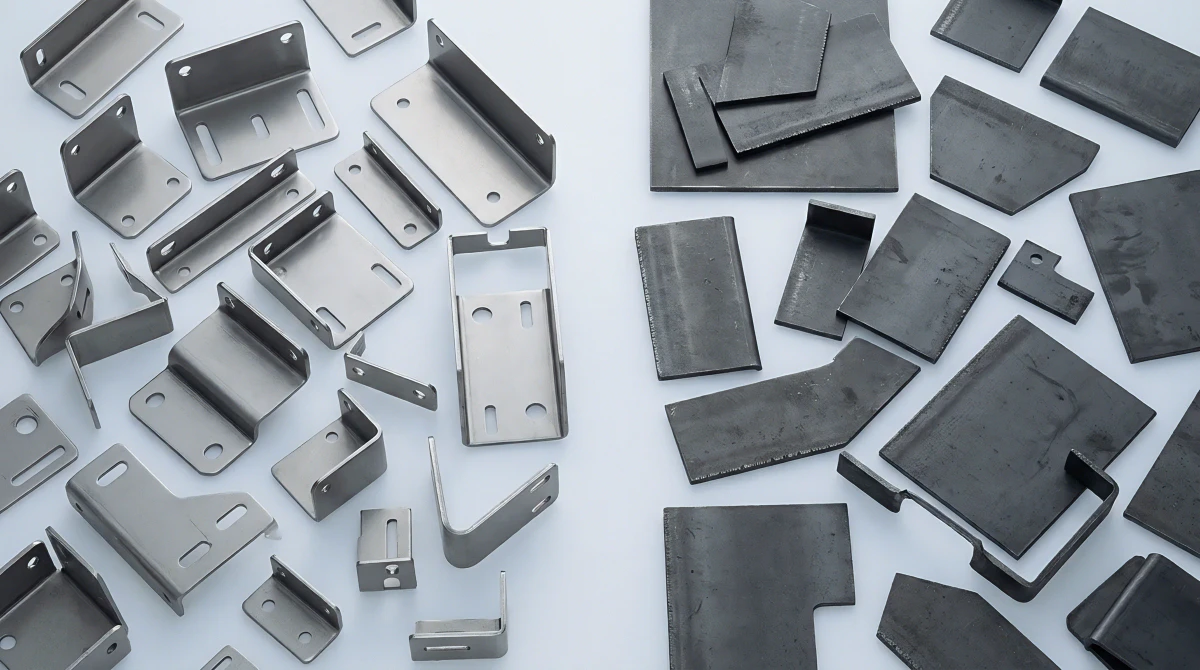
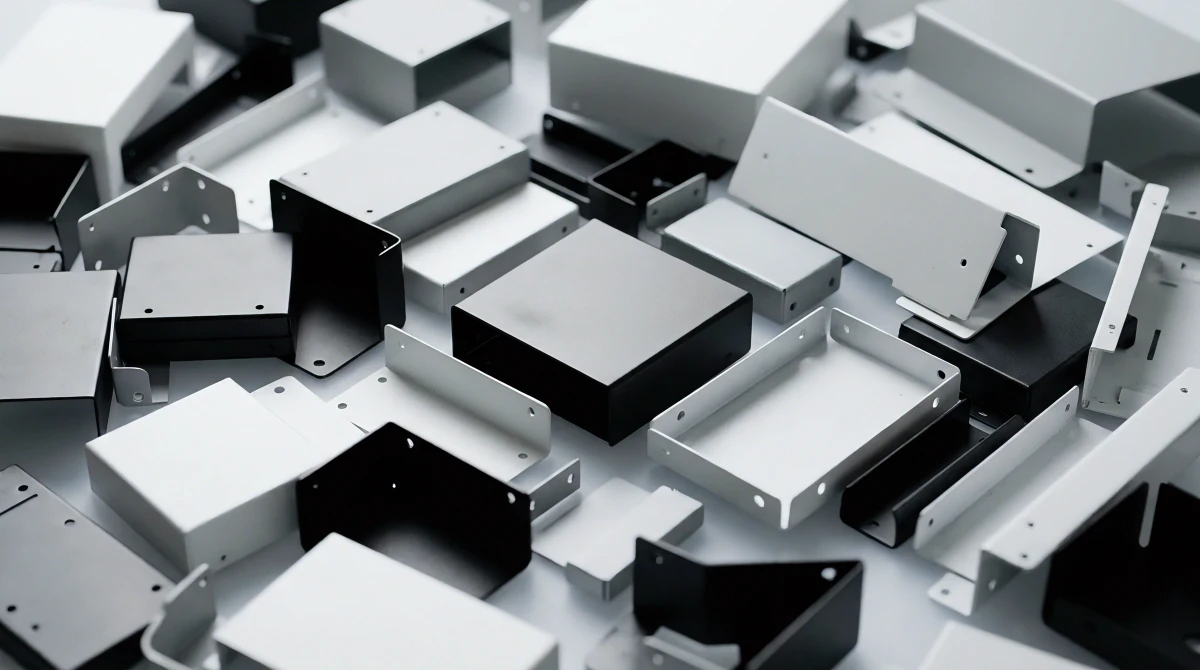
A panel is a large flat sheet part, such as an enclosure side, a cover or a facade sheet.

Every Panel article of the Sheet Metal Resources, newest first, each written from published standards, research and makers’ data.

Meaning

A panel is a large flat sheet part, such as an enclosure side, a cover or a facade sheet. Its large flat area shows every distortion, wave and change of finish. Thin panels have little stiffness to hold their shape. They are where flatness, weld sequence and finish direction matter most.

Weld Distortion

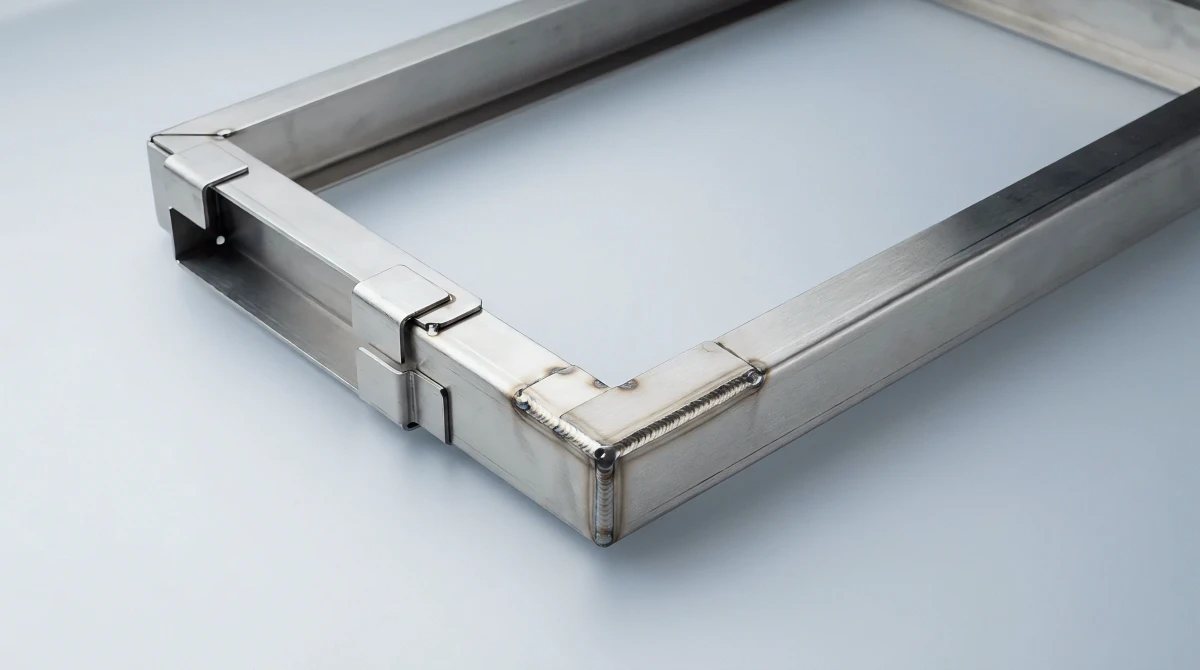
A thin panel has little stiffness along its unsupported edge. TWI notes that longitudinal shrinkage along a seam bows and buckles thin plate. Stiffening flats or angles welded along a seam resist the bow. A spot-welded flange moves less than a seam-welded one, but needs overlap and access for two electrodes.
Read More

Flatness and Oil Canning

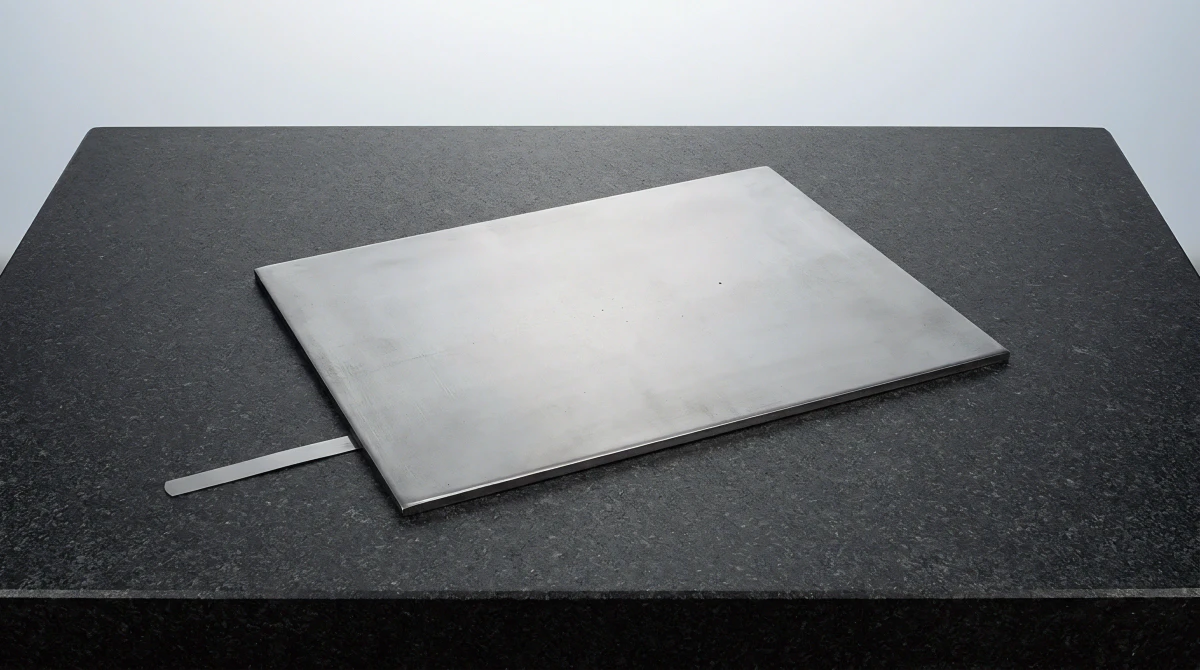
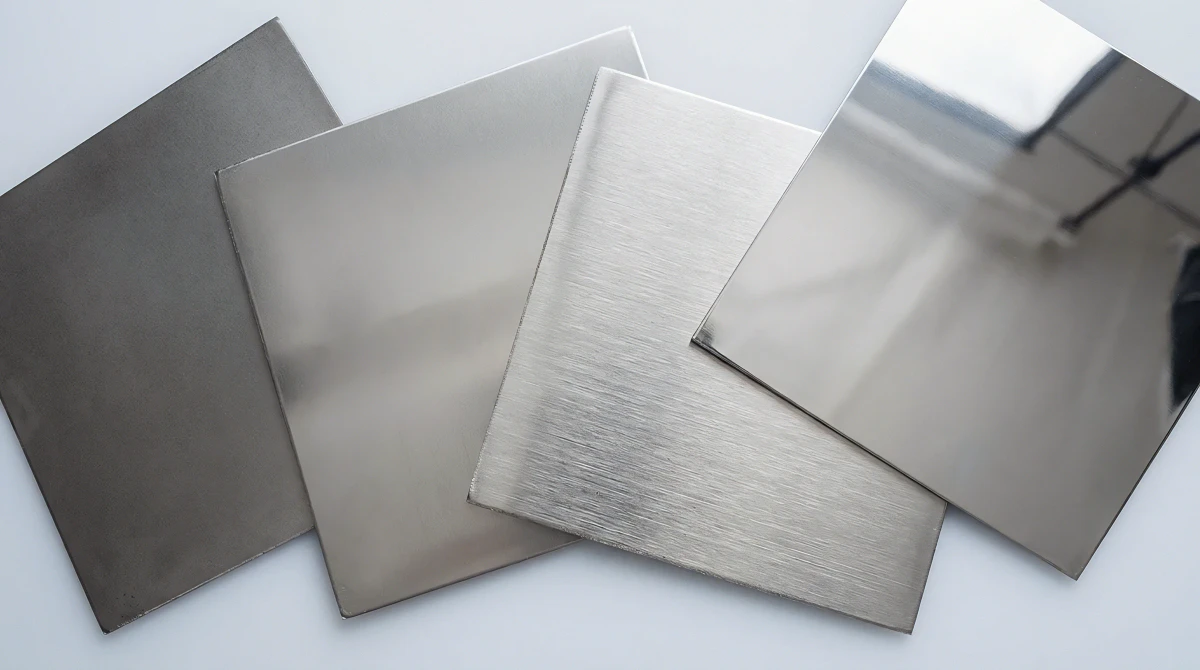
Euro Inox notes that pattern rolled sheet stiffens thin gauges. It also reduces oil canning, the visible distortion of large flat areas. Patterned sheet hides knocks and scratches better than plain finishes. Thinner gauges can then be used on large panels.

Finish Consistency

On large panels, finish direction and coil batch become visible. Mixed direction can look contrasting under some lighting. Euro Inox advises coils from one production batch where panels share one elevation. Patterned or directional external finishes run vertically to help rainwater clean them.

On the Rack

A rack that mixes a 1 mm (0.04 in) panel and a 6 mm (0.24 in) bracket cannot cure both evenly. The thick part lags in reaching cure temperature, and the thin panel is soaked longer than the sheet allows. Parts of similar thickness are therefore hung together.

Fixing

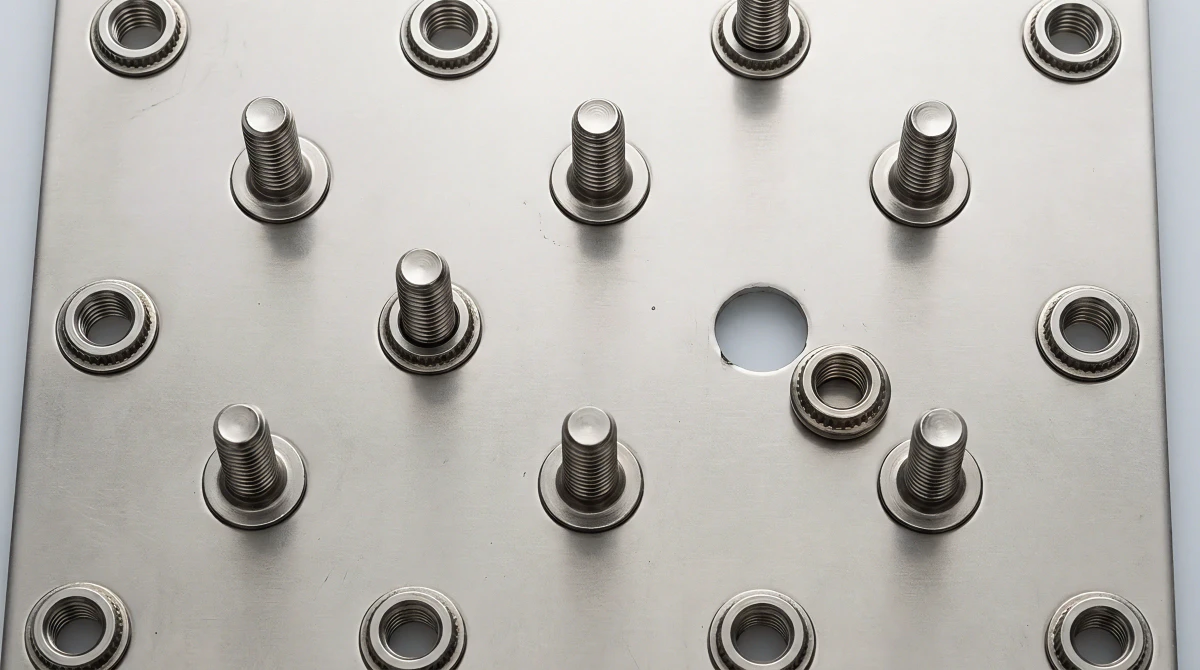
Studs welded to the back of a stainless panel need no clean-up and do not show through. Euro Inox ties this to sheet at least 1 mm (0.04 in) thick. Over-tightening on thin gauge can still pull visible distortion through the face.

Inserting Self-Clinching Fasteners in Sheet Metal Step by Step

Cut the hole to size without deburring, check the sheet is soft enough, finish the panel, then squeeze the nut in parallel until its head meets the sheet.

How a Self-Clinching Nut Locks Into Thin SheetInstallation takes three moves. First a hole of the specified size is punched or drilled, the nut's shank is placed in it, and a press squeezes nut and sheet between parallel surfaces until the head meets the sheet.
ISO 2768 and DIN 6930 General Tolerances for Bent Sheet Metal Parts

ISO 2768-1 covers sheet metal parts by size class; on a bent part its angular row decides fit, and DIN 6930-2 is written for stamped steel parts only.

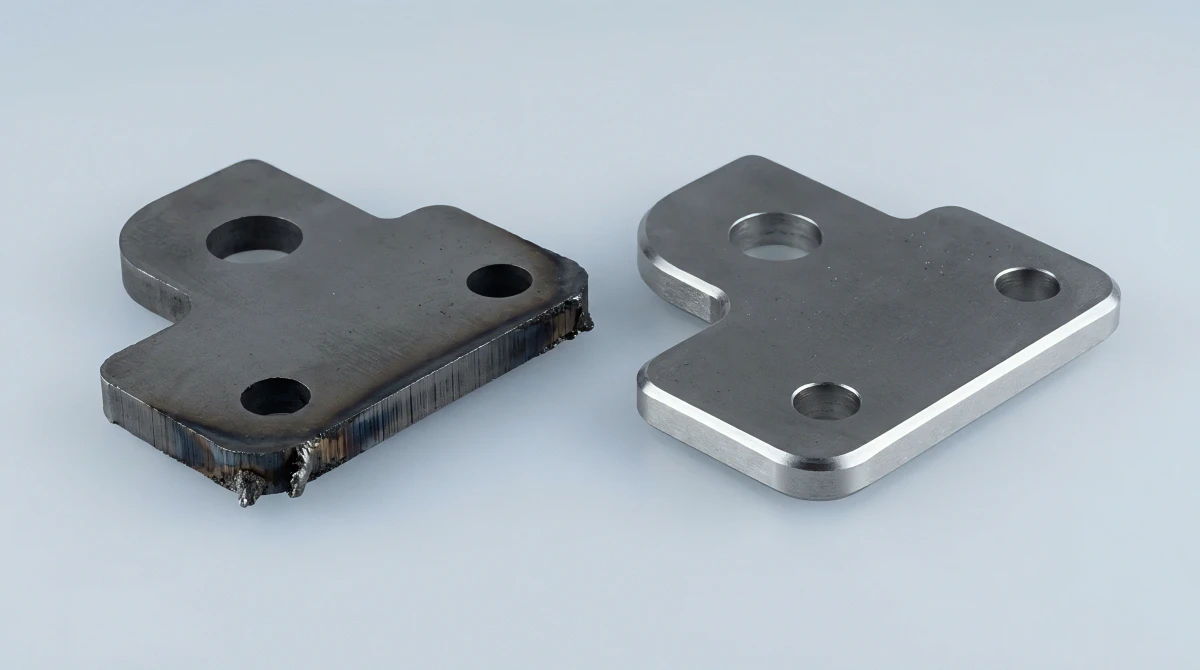
What ISO 2768-1 Covers on a Sheet Metal DrawingISO 2768-1, first edition 1989-11-15, sets general tolerances for linear and angular dimensions without individual tolerance indications, in four classes. Its scope names sheet metal directly: it applies to the dimensions of parts produced by metal removal or parts formed from sheet metal.

Cold Rolled DC01 and Hot Rolled S235 Steel Sheet for Cut and Bent Parts

Choose DC01 for thin formed parts that need tight thickness, flatness and a clean surface, and S235 for thicker load-bearing parts, then name the standard on the order.

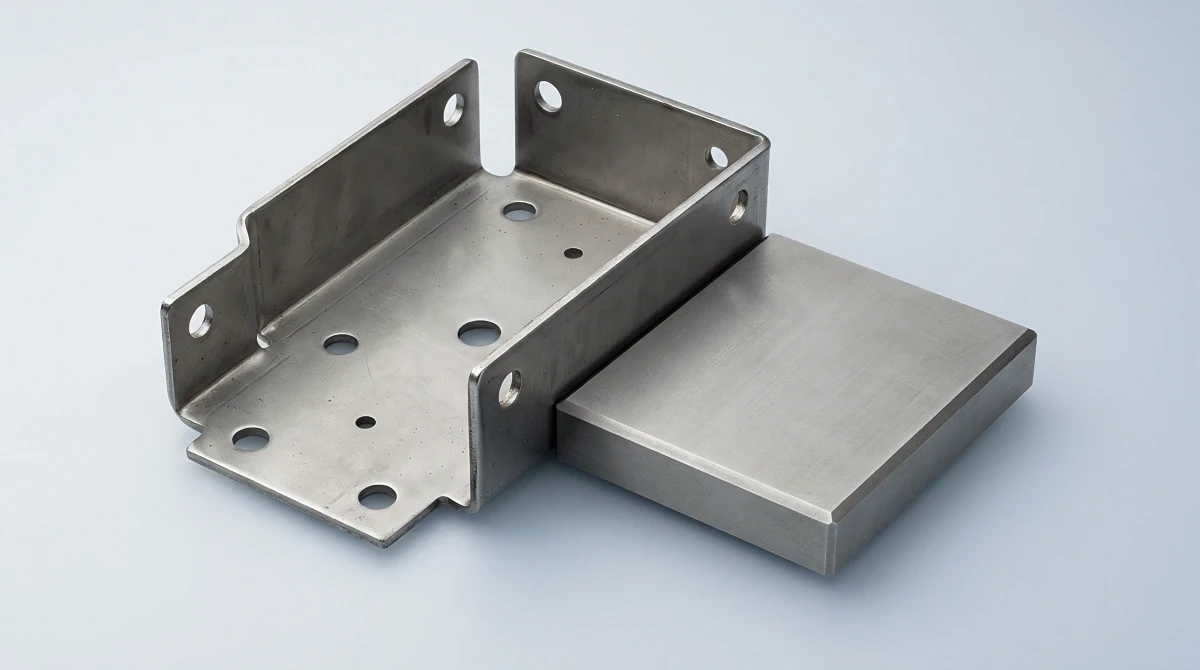
DC01 and S235 Compared for Laser Cut and Bent Sheet PartsDC01 is a cold-rolled non-alloy mild steel for cold forming under EN 10130, material number 1.0330, which ArcelorMittal describes as having a guaranteed maximum yield and tensile strength, a guaranteed minimum elongation and good formability. S235 is a hot-rolled carbon-manganese structural steel under EN 10025-2, described by the same mill as having a guaranteed minimum yield and tensile strength and satisfactory ductility, in JR, J0 and J2 versions that differ in impact-test temperature.

Powder Coated Sheet Metal Batch From Pretreatment to Cure and Inspection

A powder coating cures in minutes but depends on pretreatment, rack mass and film allowance, and a lot is judged on gloss, film and adhesion, not corrosion hours.

The Stages a Coated Batch Passes ThroughA batch of sheet metal parts goes through six stages on its way from the bare part to a coated one: pretreatment, drying, masking and hanging, application, cure, and cooling and packing. Each stage has a condition the powder maker states, and each has its own place in the schedule.

Steel Sheet Flatness Tolerance Before Cutting and Bending

Read flatness by thickness, width and strength class, specify normal or special, and keep parts clear of the edge wave strip.

What a Flatness Tolerance Covers Before the First CutIn the EN 10131 and EN 10051 tables, as ArcelorMittal prints them, flatness is a maximum deviation in millimeters, and the tables apply to sheet, not to coil. The extract does not describe the set-up used to measure it.

Request a Sheet Metal Quote

Send the 2D drawing and the 3D file, with the quantity and the stage of the project. An engineer replies within 1 working day.

The quote form, the mutual NDA and the private folder for your files are on Protolis Atelier, with Sheet Metal chosen.

Request a Quote