High-Strength Steel

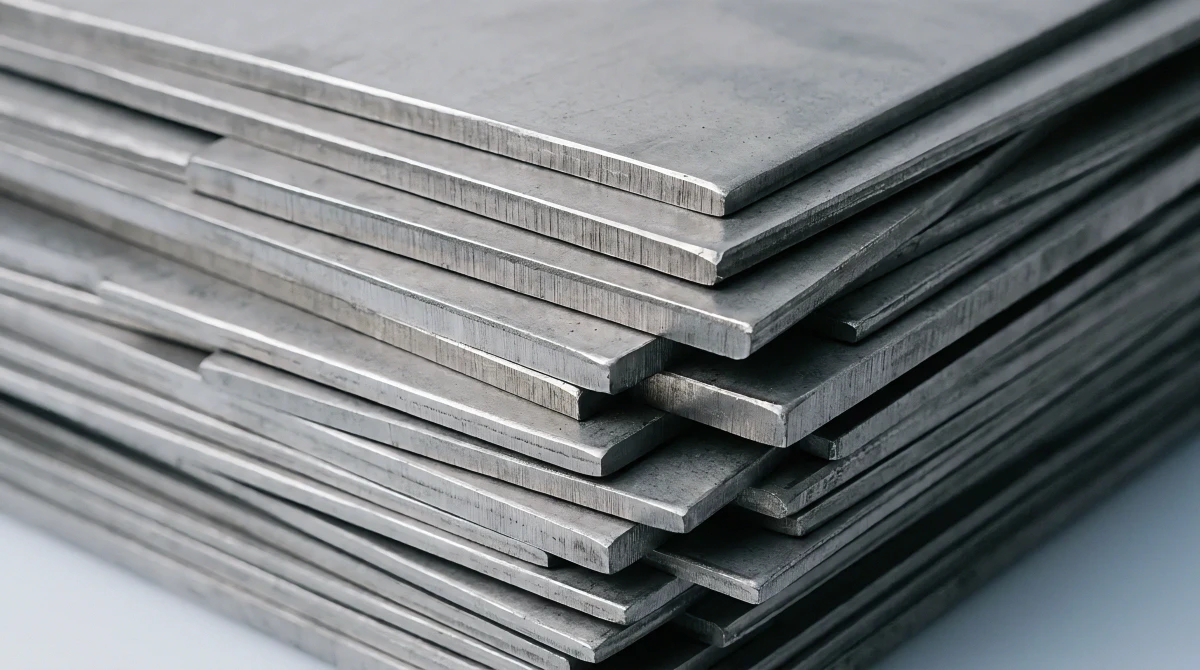
High-strength steel is sheet with a yield well above mild steel, chosen for strength or stiffness but harder to bend and hold to size.

Every High-Strength Steel article of the Sheet Metal Resources, newest first, each written from published standards, research and makers’ data.

Meaning

High-strength steel is sheet with a yield well above mild steel, chosen for strength or stiffness but harder to bend and hold to size. In EN 10131 it falls in the upper yield classes, from 340 MPa (49 ksi) up. Durma’s press brake chart treats grades above 800 N/mm² (116 ksi) on their own. Its choice changes the die, the force and the tolerance band at once.

Wider Band

EN 10131 widens the thickness band as yield rises. For 1.60 to 2.00 mm (0.063 to 0.079 in) sheet, the normal band grows from ±0.10 to ±0.16 mm (±0.004 to ±0.006 in). The special band for the hardest class matches the normal band for the softest. A drawing that picks a high-strength grade for stiffness therefore inherits a wider band. The tolerance the sheet can promise is set when the grade is chosen.
Read More

Flatness at Order

The EN 10131 flatness tables stop at 340 MPa (49 ksi). Above that, flatness is specified at enquiry and order. A drawing that relies on flatness in such steel states a number and a measuring length.

At the Brake

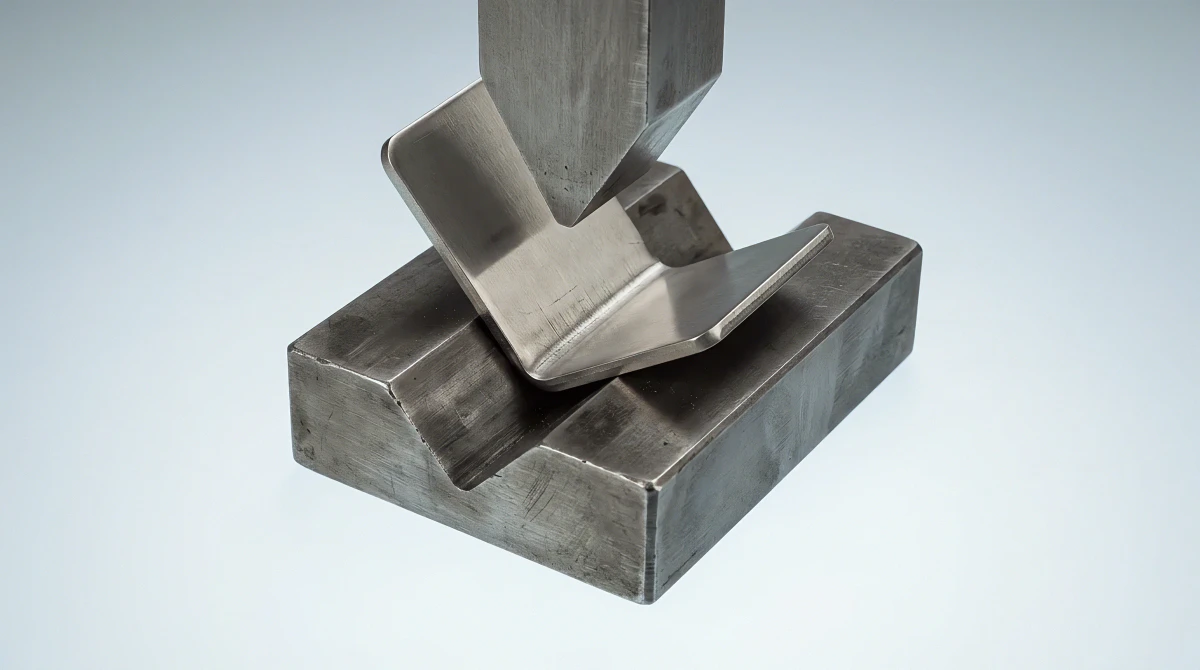
Durma puts the V opening for high-strength steel at 12 to 20 thicknesses. Wila warns that such steels often want more than 12 to 15. Durma gives bending force 2.0 to 3.0 times that of mild steel. Springback also climbs with yield strength, per SSAB.

Planning

The first formed piece shows the real springback of the delivered lot. Die width, force rating and angle allowance are then confirmed before the run.

Inserting Self-Clinching Fasteners in Sheet Metal Step by Step

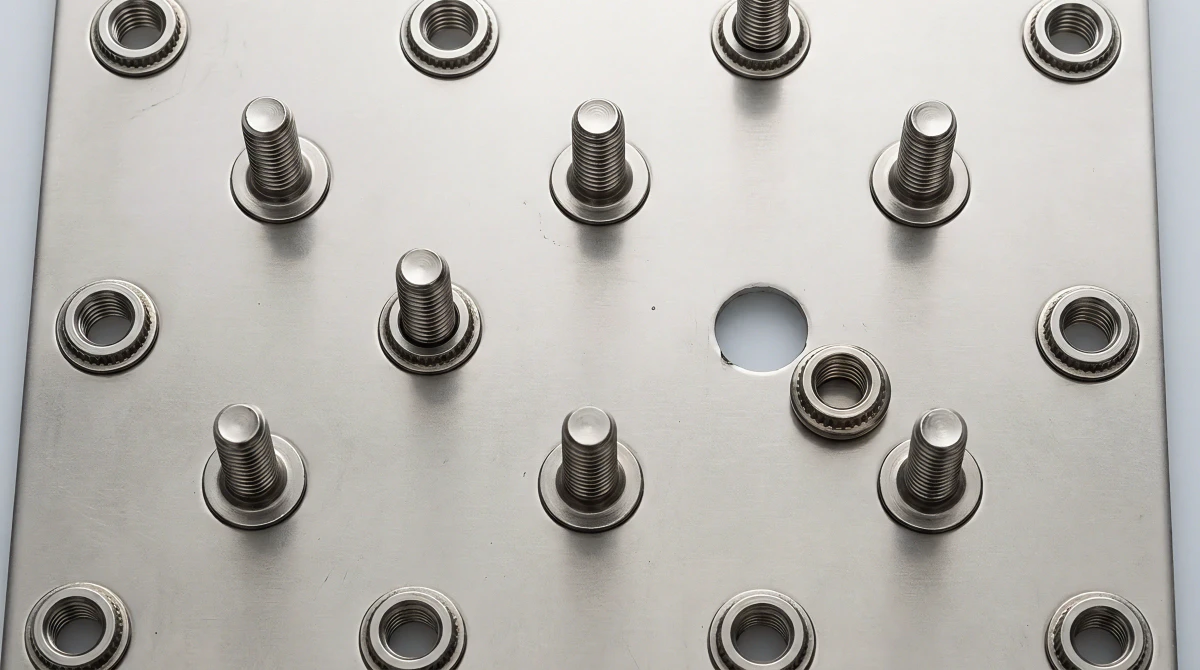
Cut the hole to size without deburring, check the sheet is soft enough, finish the panel, then squeeze the nut in parallel until its head meets the sheet.

How a Self-Clinching Nut Locks Into Thin SheetInstallation takes three moves. First a hole of the specified size is punched or drilled, the nut's shank is placed in it, and a press squeezes nut and sheet between parallel surfaces until the head meets the sheet.
Minimum Bend Radius by Sheet Material and Thickness

Take the minimum bend radius from the maker's table for the exact grade, temper, thickness and bend direction, then draw the radius the die forms.

Minimum Inside Bend Radius Values for Steel SheetSteel makers print the minimum as a multiple of thickness, t, and the multiple rises with strength and with thickness. The two hot-rolled cold-forming ranges below are the clearest published sets; mild cold-rolled steels such as DC01 come with formability figures but, in the makers' datasheets cited here, no printed radius.

Bend Angle and Flange Length Tolerance on Press Brake Parts

Set the bend angle tolerance from the position the flange tip has to reach, and control sheet thickness, die width and the flat pattern behind it.

Bend Angle and Flange Length Tolerance ValuesThere is no single tolerance for bent sheet metal. Durmapress says so plainly and offers planning ranges per operation instead, warning that they are a guide only and move with the material, thickness, size of part, machine, state of the tooling, number of operations and the way parts are inspected.

High-Strength Steel Sheet S355 and S420 and the Springback It Brings

Order S355 or S420 for bent parts as the EN 10149-2 MC grade, bend at the recommended radius, and expect more springback than mild steel.

S355 and S420 Sheet Grades in EN 10149-2 and EN 10025-2High-strength sheet for cut and bent parts comes mainly from two European product standards. EN 10025-2 covers non-alloy structural steels, the S235, S275 and S355 families with the JR, J0 and J2 suffixes that set the impact-test temperature.

Press Brake Bending of Sheet Metal From Die Opening to Final Angle

A press brake bend is decided by the die opening, which sets radius, flange length, springback and the flat pattern, so the first piece carries every assumption of the lot.

How a Press Brake Forms a Bend in AirMost sheet metal is bent by air forming. The punch pushes the sheet into a V-shaped die, and the sheet touches only three points: the two shoulders of the die and the tip of the punch.

Cold Rolled Steel Sheet Thickness Tolerance Under EN 10131

Choose the tolerance column by what the part does with a thickness error, and write the strength class and column on the order.

What EN 10131 Allows on the Thickness of a Cold Rolled SheetEN 10131 covers cold rolled flat products of uncoated and electrolytically coated steel, and ArcelorMittal's tolerance tables reproduce its thickness limits as guarantees. The tables run from 0.35 mm to 3.00 mm and apply per nominal thickness band, per width class and per yield strength class.

Request a Sheet Metal Quote

Send the 2D drawing and the 3D file, with the quantity and the stage of the project. An engineer replies within 1 working day.

The quote form, the mutual NDA and the private folder for your files are on Protolis Atelier, with Sheet Metal chosen.

Request a Quote