Powder

Powder is the dry coating sprayed electrostatically onto a prepared sheet part and cured in an oven into a continuous film.

Every Powder article of the Sheet Metal Resources, newest first, each written from published standards, research and makers’ data.

Meaning

Powder is the dry coating sprayed electrostatically onto a prepared sheet part and cured in an oven into a continuous film. A published example is IGP’s matte indoor powder, IGP-DURA mix 3303E-A1. Its data sheet gives a recommended film of 60 to 80 µm (0.0024 to 0.0031 in). The film’s quality depends on the pretreatment more than on the oven.

Cure Schedule

Powder cures by the temperature of the part, not the air in the oven. IGP lists 15 to 25 minutes at 180 °C (356 °F) and 10 to 15 minutes at 190 °C (374 °F). At 200 °C (392 °F) the window is 8 to 12 minutes. Prismatic Powders starts the timer only when the thickest portion reaches cure temperature.
Read More

Pretreatment by Metal

IGP writes its pretreatments per substrate. Aluminum takes chromating, pre-anodizing or a chrome-free system to GSB International and QUALICOAT. Steel takes zinc or iron phosphating. Galvanized steel takes zinc phosphating, chrome (III) passivation or chromating. Stainless is not listed, so the coater is asked how it will be prepared.

Edge Readiness

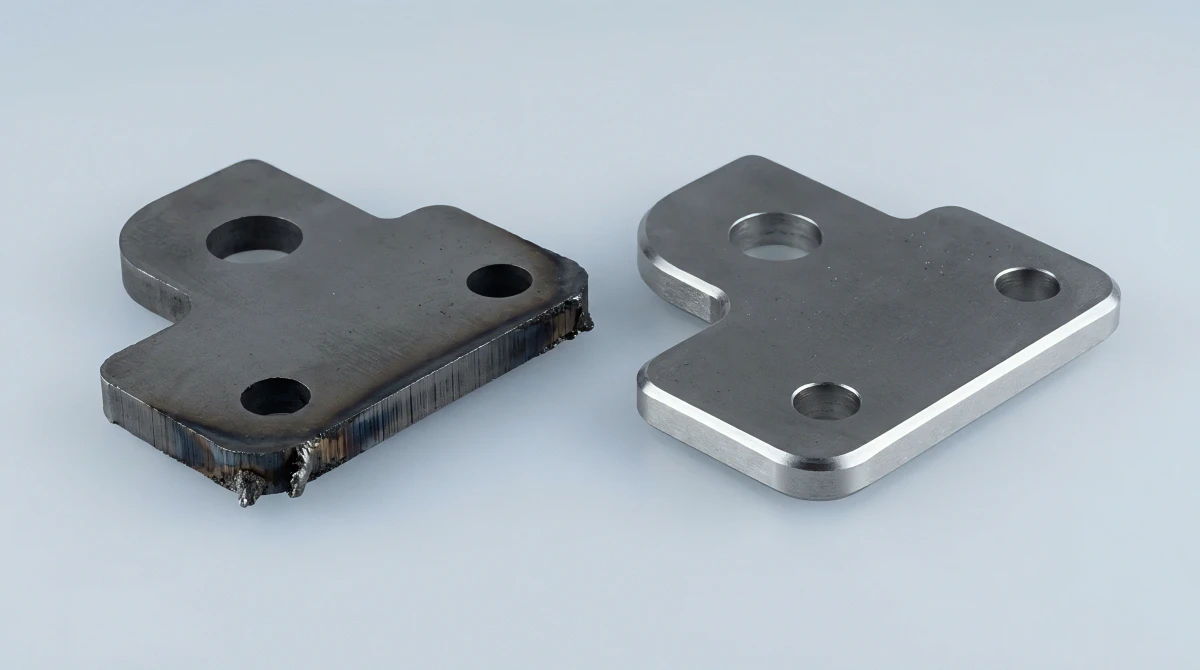
An oxygen-cut edge carries scale that powder does not cover well. A part going to powder coat is therefore cut in nitrogen, or has its oxide removed.

Coverage and Storage

At a density of 1.3 to 1.6 kg/l (10.8 to 13.4 lb/gal), one kilogram covers about 7.8 to 12.8 m² (84 to 138 ft²). That figure is arithmetic from IGP’s values, before any powder is lost. Unopened powder keeps at least 24 months at 25 °C (77 °F) or below. Recovered powder may be mixed in, so a repeat order from a new powder lot gets a color check.

Service Rating

IGP rates this powder for indoor use. A galvanized part headed outdoors needs a powder its maker rates for outdoor service.

Inserting Self-Clinching Fasteners in Sheet Metal Step by Step

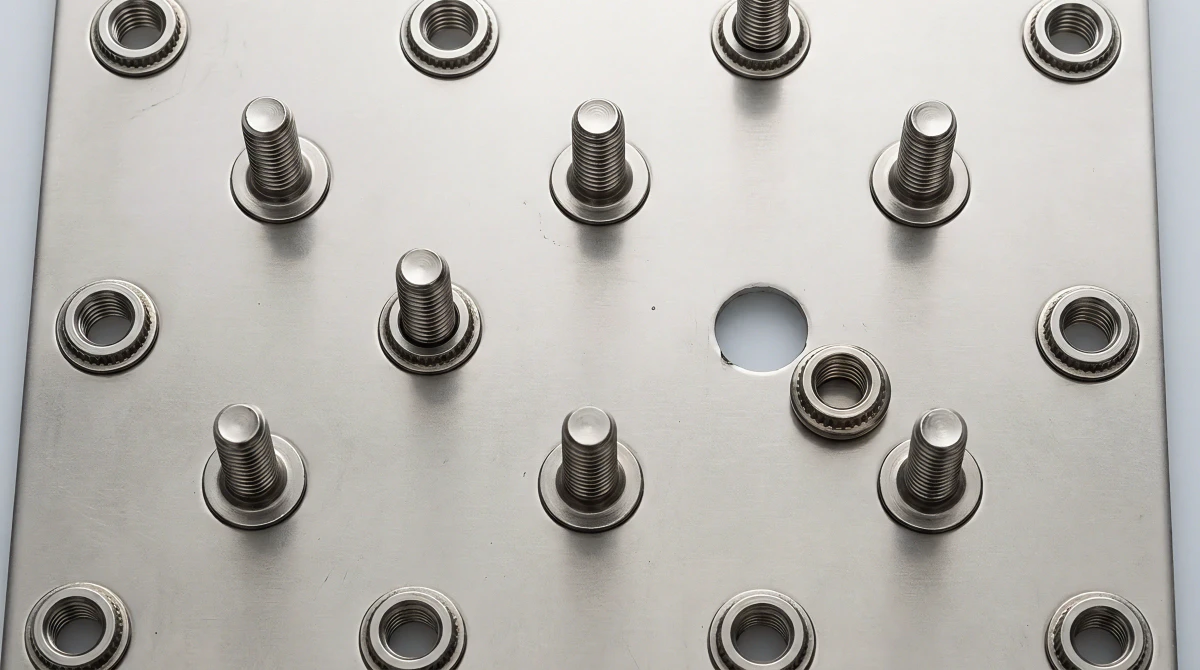
Cut the hole to size without deburring, check the sheet is soft enough, finish the panel, then squeeze the nut in parallel until its head meets the sheet.

How a Self-Clinching Nut Locks Into Thin SheetInstallation takes three moves. First a hole of the specified size is punched or drilled, the nut's shank is placed in it, and a press squeezes nut and sheet between parallel surfaces until the head meets the sheet.
ISO 1461 Hot-Dip Galvanizing of Fabricated Steel Parts

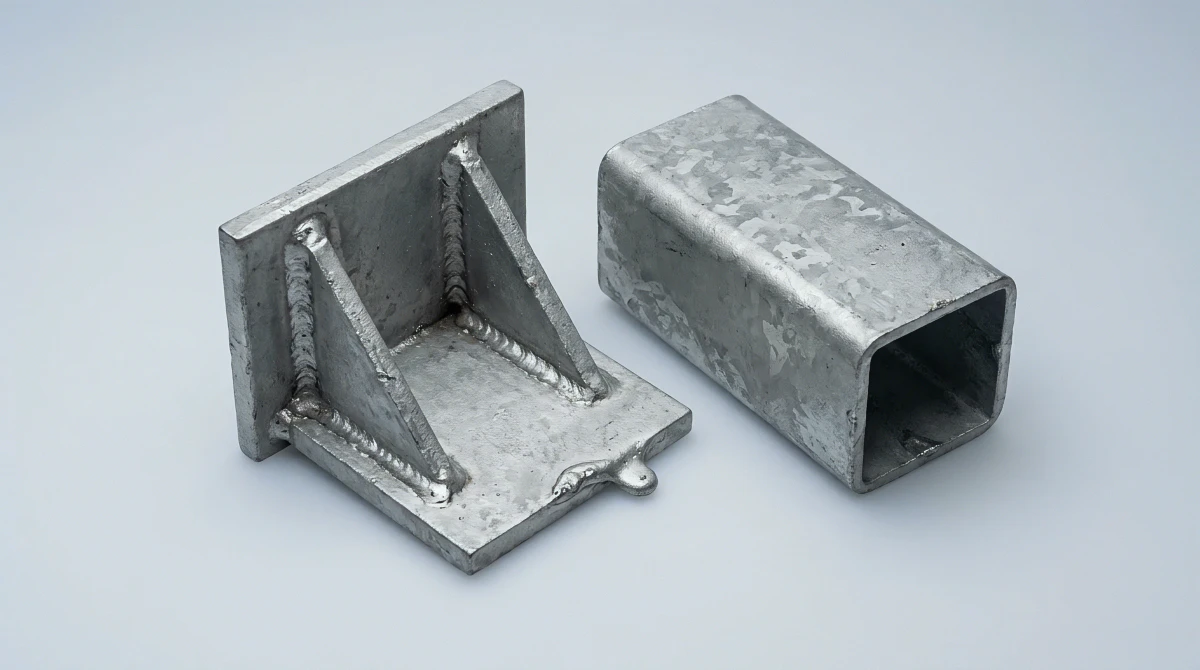
ISO 1461 sets zinc thickness by steel thickness, measures it away from edges, and expects cut edges ground and parts bent before galvanizing.

What ISO 1461 Covers for Cut and Bent Steel PartsISO 1461:2022, the fourth edition, sets out the properties and test methods of zinc coatings formed when finished iron and steel articles, some castings included, are dipped in molten zinc holding at most 2 % of other metals. Its key word is fabricated: the parts are cut, formed and welded first and galvanized afterward in batches, by a company the standard now defines as the galvanizer.

Powder Coated Sheet Metal Batch From Pretreatment to Cure and Inspection

A powder coating cures in minutes but depends on pretreatment, rack mass and film allowance, and a lot is judged on gloss, film and adhesion, not corrosion hours.

The Stages a Coated Batch Passes ThroughA batch of sheet metal parts goes through six stages on its way from the bare part to a coated one: pretreatment, drying, masking and hanging, application, cure, and cooling and packing. Each stage has a condition the powder maker states, and each has its own place in the schedule.

Laser Cutting Sheet Metal With Oxygen, Nitrogen or Air Assist Gas

Oxygen, nitrogen and air each leave a different edge on laser cut sheet, and the choice of gas settles speed, finishing work and what the next process accepts.

Which Assist Gas Cuts Which Sheet MetalThree gases cover almost all sheet work: oxygen, nitrogen and compressed air. Oxygen belongs to carbon and low-alloy steel, nitrogen to stainless steel and aluminum, and air sits between them as the cheaper trade for thin parts that tolerate a slightly darker edge.

Galvanized Steel Sheet Coating Weight Designations for Cut and Welded Parts

Read the coating designation as a minimum zinc mass over both faces, name the standard and test basis, and plan ventilation for cutting and welding.

What a Coating Weight Designation Says About the SheetA designation states the minimum mass of zinc, or zinc alloy, on the sheet and the units it is stated in. G90 means hot-dip galvanized, with a triple spot test average of at least 0.90 ounce per square foot, counted over both sides together.

5052 H32 Aluminum Sheet for Bending and Welding

Name the alloy, temper and specification, draw bend radii from a trial bend at the real thickness, and design welded joints to the annealed strength the weld leaves.

What 5052 H32 Offers a Bent and Welded Aluminum PartAlloy 5052 is an aluminum-magnesium alloy, registered in the United States in 1954. The Aluminum Association's international alloy register sets its composition: silicon 0.25 % maximum, iron 0.40 %, copper 0.10 %, manganese 0.10 %, magnesium 2.2 to 2.8 %, chromium 0.15 to 0.35 %, zinc 0.10 %, and 0.05 % each and 0.15 % in total for other elements, with aluminum the remainder.

Request a Sheet Metal Quote

Send the 2D drawing and the 3D file, with the quantity and the stage of the project. An engineer replies within 1 working day.

The quote form, the mutual NDA and the private folder for your files are on Protolis Atelier, with Sheet Metal chosen.

Request a Quote