EN 10131

EN 10131 is the European standard for the dimensional and shape tolerances of cold rolled flat steel, setting thickness, width, length and flatness bands by yield class and width.

Every EN 10131 article of the Sheet Metal Resources, newest first, each written from published standards, research and makers’ data.

Meaning

EN 10131 is the European standard for the dimensional and shape tolerances of cold rolled flat steel, setting thickness, width, length and flatness bands by yield class and width. It applies to cold rolled grades such as DC01, which SSAB and voestalpine supply to its tolerances. Mills offer a normal and a tighter special tolerance.

Thickness

ArcelorMittal’s tables give, for steel with a yield below 260 MPa (38 ksi) and widths up to 1,200 mm (47 in), ±0.10 mm (±0.004 in) normal and ±0.060 mm (±0.0024 in) special at 1.60 to 2.00 mm, and ±0.15 and ±0.100 mm at 2.50 to 3.00 mm. The bands widen as yield rises and as the sheet gets wider.
Read More

Flatness and Length

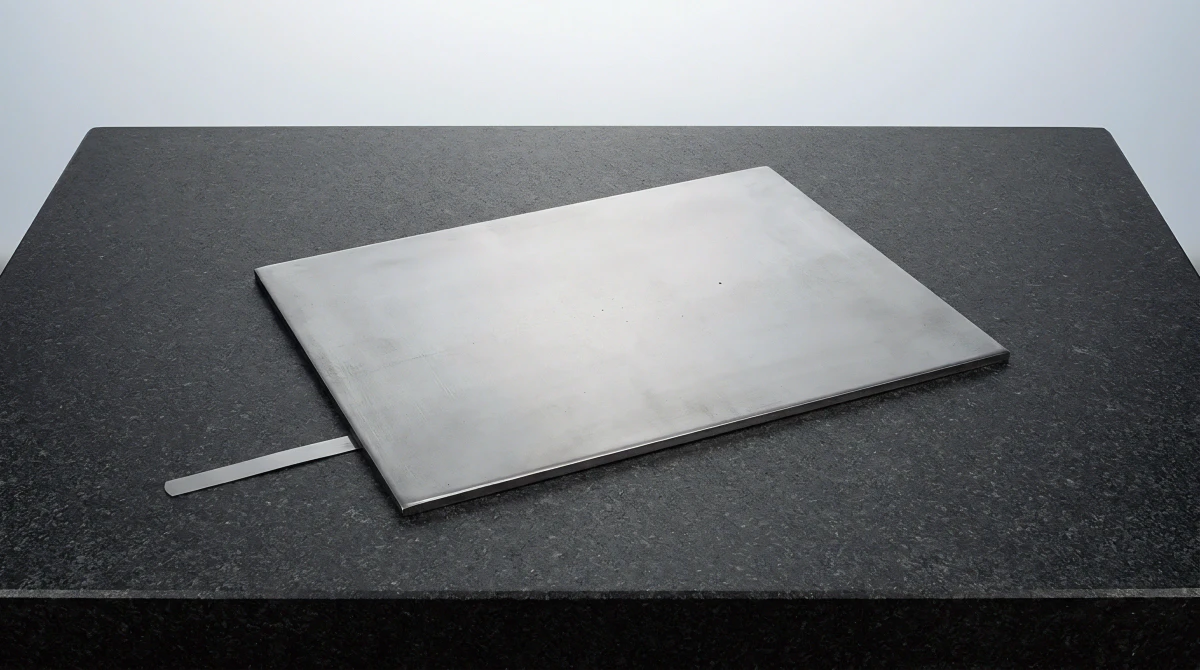
Normal flatness for the lowest yield class at 1.2 mm and over, 600 to 1,200 mm wide, is 7 mm (0.28 in), and special 3 mm (0.12 in). For steels at 340 MPa (49 ksi) yield and above, flatness is agreed at enquiry and order. Length tolerance is 0 to +6 mm below 2,000 mm.

Effect on Parts

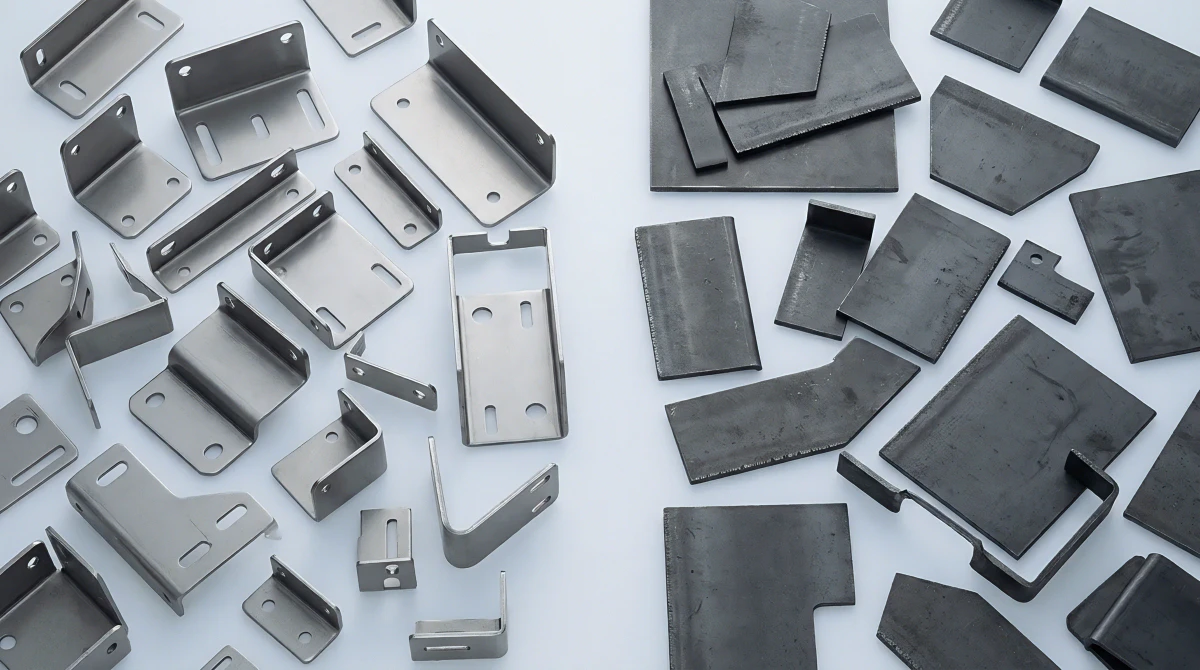
Thickness variation becomes bend angle and flange variation at the press brake, and it eats into slot and tab clearances. A slot cut to a nominal 2 mm with 0.05 mm (0.002 in) of planned clearance has none at the thick end of the normal band. Against hot rolled sheet under EN 10051 at the same thickness, the cold rolled band is roughly 1.7 times narrower, which is one reason thin formed parts are often made from cold rolled sheet.
Sheet Metal Inspection From First Article to Batch Release

Measure the first part against every requirement, then release each lot on a defined sample, with weld, coating and hardware checks tied to their standards.

First Article Inspection for Sheet Metal PartsA first article inspection measures the first part made by the production process against every requirement on the drawing and records the result. In aerospace the practice has its own standard, SAE AS9102, whose scope is to establish the baseline requirements for performing and documenting a first article inspection.

Bend Angle and Flange Length Tolerance on Press Brake Parts

Set the bend angle tolerance from the position the flange tip has to reach, and control sheet thickness, die width and the flat pattern behind it.

Bend Angle and Flange Length Tolerance ValuesThere is no single tolerance for bent sheet metal. Durmapress says so plainly and offers planning ranges per operation instead, warning that they are a guide only and move with the material, thickness, size of part, machine, state of the tooling, number of operations and the way parts are inspected.

Cold Rolled DC01 and Hot Rolled S235 Steel Sheet for Cut and Bent Parts

Choose DC01 for thin formed parts that need tight thickness, flatness and a clean surface, and S235 for thicker load-bearing parts, then name the standard on the order.

DC01 and S235 Compared for Laser Cut and Bent Sheet PartsDC01 is a cold-rolled non-alloy mild steel for cold forming under EN 10130, material number 1.0330, which ArcelorMittal describes as having a guaranteed maximum yield and tensile strength, a guaranteed minimum elongation and good formability. S235 is a hot-rolled carbon-manganese structural steel under EN 10025-2, described by the same mill as having a guaranteed minimum yield and tensile strength and satisfactory ductility, in JR, J0 and J2 versions that differ in impact-test temperature.

Steel Sheet Flatness Tolerance Before Cutting and Bending

Read flatness by thickness, width and strength class, specify normal or special, and keep parts clear of the edge wave strip.

What a Flatness Tolerance Covers Before the First CutIn the EN 10131 and EN 10051 tables, as ArcelorMittal prints them, flatness is a maximum deviation in millimeters, and the tables apply to sheet, not to coil. The extract does not describe the set-up used to measure it.

Cold Rolled Steel Sheet Thickness Tolerance Under EN 10131

Choose the tolerance column by what the part does with a thickness error, and write the strength class and column on the order.

What EN 10131 Allows on the Thickness of a Cold Rolled SheetEN 10131 covers cold rolled flat products of uncoated and electrolytically coated steel, and ArcelorMittal's tolerance tables reproduce its thickness limits as guarantees. The tables run from 0.35 mm to 3.00 mm and apply per nominal thickness band, per width class and per yield strength class.

Request a Sheet Metal Quote

Send the 2D drawing and the 3D file, with the quantity and the stage of the project. An engineer replies within 1 working day.

The quote form, the mutual NDA and the private folder for your files are on Protolis Atelier, with Sheet Metal chosen.

Request a Quote