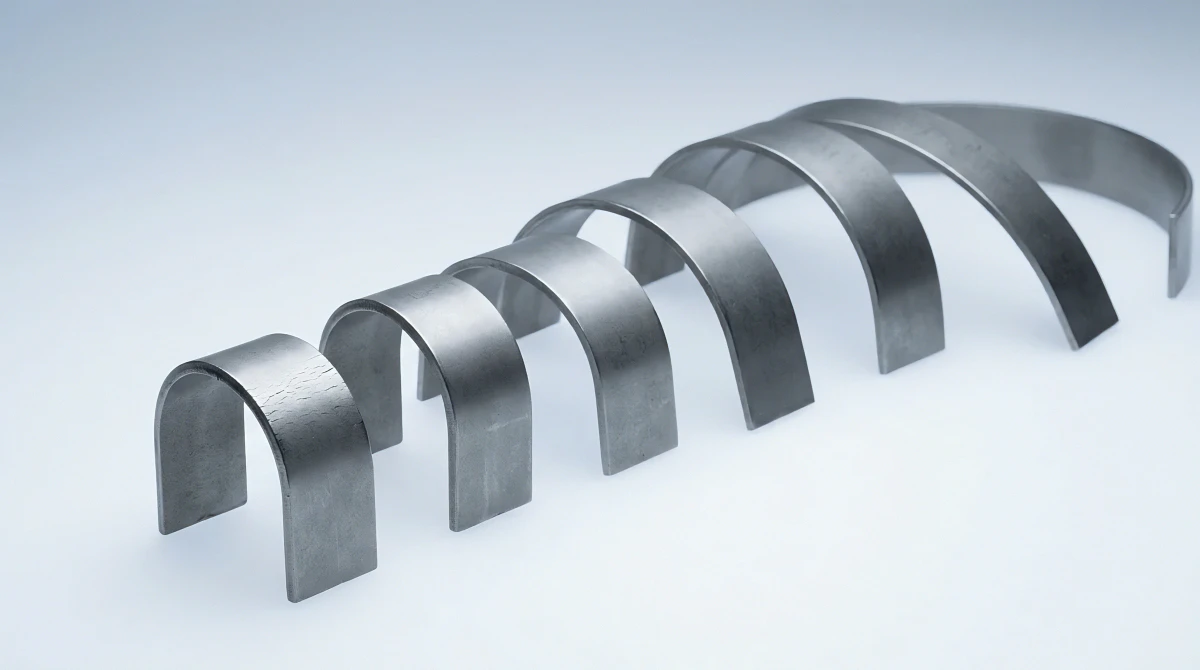
Flat Pattern

The flat pattern is the unfolded outline of a bent part, the shape the laser cuts before the press brake forms it.

Every Flat Pattern article of the Sheet Metal Resources, newest first, each written from published standards, research and makers’ data.

Meaning

The flat pattern is the unfolded outline of a bent part, the shape the laser cuts before the press brake forms it. Its developed length depends on the inside radius and the bend deduction or K-factor assumed for each bend. Every flange length on the finished part is decided by it before the brake moves.

Radius and Die

In air bending the inside radius is set by the V-die opening, so the die chosen at the brake has to match the radius the flat pattern assumed. Wila warns that changing the V-opening changes the product radius and with it the flat pattern, which can be an expensive change once parts are cut. Bystronic notes that a nominal 0.250 in die in metric tooling is actually 6 mm (0.236 in), a small difference that still reaches the pattern.
Read More

Systematic Error

Durmapress points out that a flat pattern built on an assumed K-factor or radius that does not match the tooling shifts every formed dimension, even with a perfect machine. Because the error repeats part after part, it is corrected by measuring a test bend, calculating the bend deduction back from the measured flanges and storing the value in the bend table. Autodesk’s documentation adds that each cell of a bend table needs measured sample pieces to be accurate.

Thickness

The sheet’s own thickness moves the pattern too. In The Fabricator’s 10 gauge example, the bend deduction runs from 0.221 to 0.237 in (5.61 to 6.02 mm) across the gauge band, so parts cut from one flat pattern come out with different flanges.

Minimum Bend Radius by Sheet Material and Thickness

Take the minimum bend radius from the maker's table for the exact grade, temper, thickness and bend direction, then draw the radius the die forms.

Minimum Inside Bend Radius Values for Steel SheetSteel makers print the minimum as a multiple of thickness, t, and the multiple rises with strength and with thickness. The two hot-rolled cold-forming ranges below are the clearest published sets; mild cold-rolled steels such as DC01 come with formability figures but, in the makers' datasheets cited here, no printed radius.
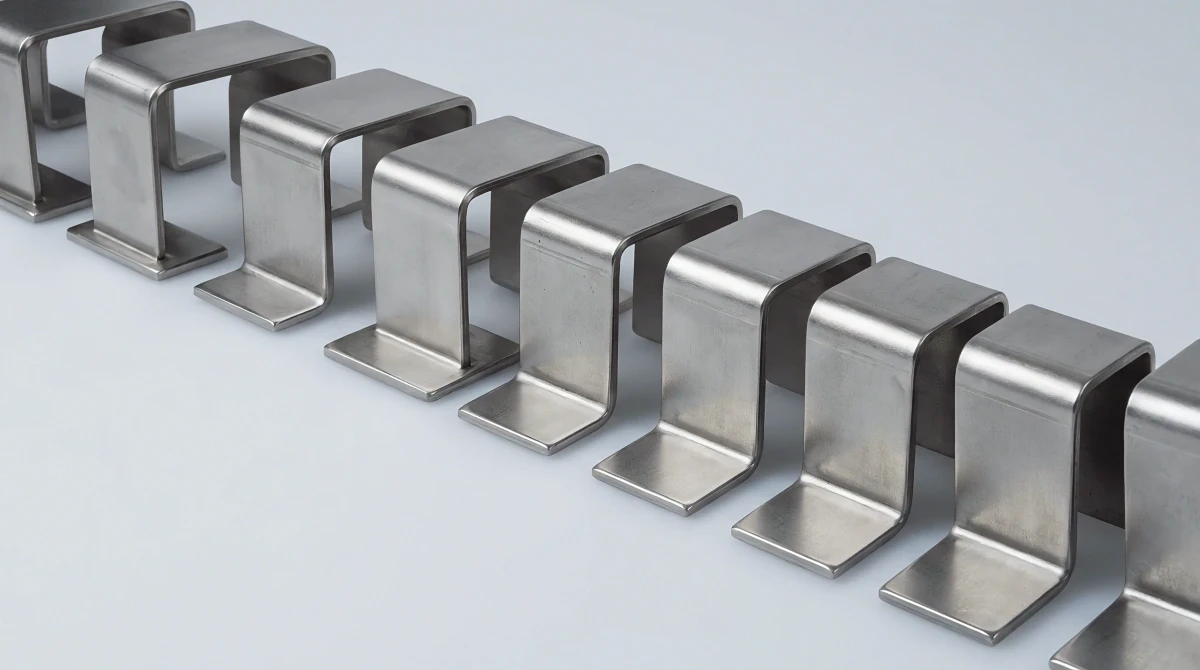
Bend Angle and Flange Length Tolerance on Press Brake Parts

Set the bend angle tolerance from the position the flange tip has to reach, and control sheet thickness, die width and the flat pattern behind it.

Bend Angle and Flange Length Tolerance ValuesThere is no single tolerance for bent sheet metal. Durmapress says so plainly and offers planning ranges per operation instead, warning that they are a guide only and move with the material, thickness, size of part, machine, state of the tooling, number of operations and the way parts are inspected.

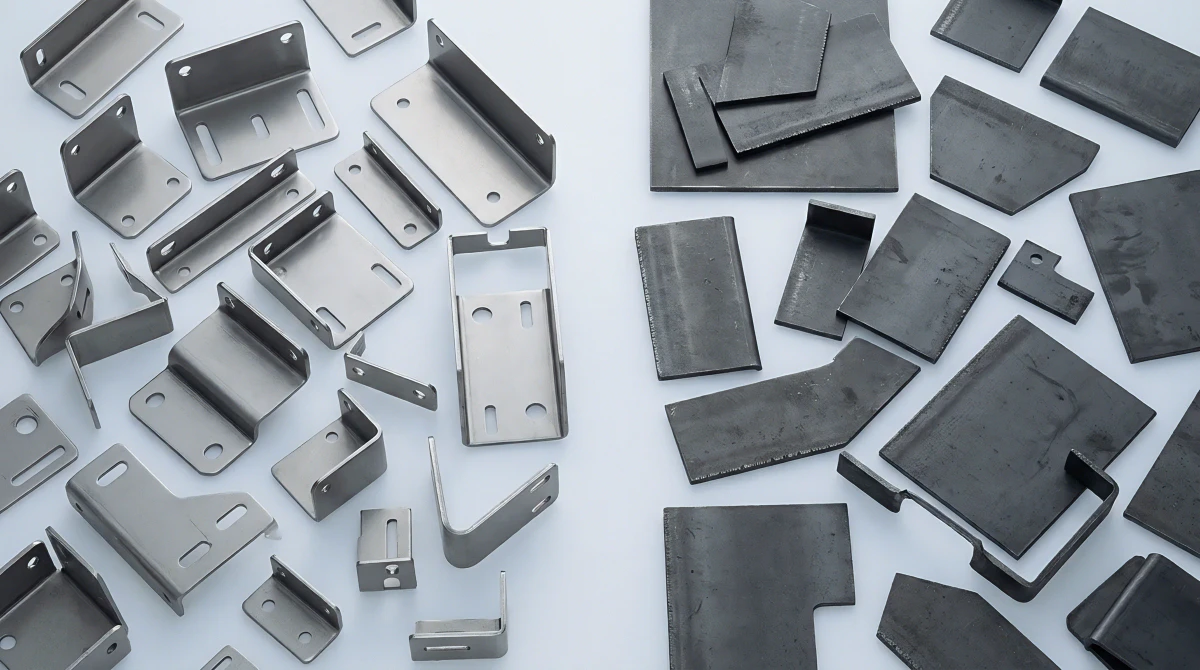
Cold Rolled DC01 and Hot Rolled S235 Steel Sheet for Cut and Bent Parts

Choose DC01 for thin formed parts that need tight thickness, flatness and a clean surface, and S235 for thicker load-bearing parts, then name the standard on the order.

DC01 and S235 Compared for Laser Cut and Bent Sheet PartsDC01 is a cold-rolled non-alloy mild steel for cold forming under EN 10130, material number 1.0330, which ArcelorMittal describes as having a guaranteed maximum yield and tensile strength, a guaranteed minimum elongation and good formability. S235 is a hot-rolled carbon-manganese structural steel under EN 10025-2, described by the same mill as having a guaranteed minimum yield and tensile strength and satisfactory ductility, in JR, J0 and J2 versions that differ in impact-test temperature.

Request a Sheet Metal Quote

Send the 2D drawing and the 3D file, with the quantity and the stage of the project. An engineer replies within 1 working day.

The quote form, the mutual NDA and the private folder for your files are on Protolis Atelier, with Sheet Metal chosen.

Request a Quote