Ra

Ra is the arithmetic average deviation of a surface profile from its centerline, the roughness value most drawings quote, in micrometers.

Every Ra article of the Sheet Metal Resources, newest first, each written from published standards, research and makers’ data.

Meaning

Ra is the arithmetic average deviation of a surface profile from its centerline, the roughness value most drawings quote, in micrometers. It is the usual way to put a number on a stainless finish. It does not separate peaks from valleys, so very different profiles can share one value. It is also not the value ISO 9013 uses for cut edges.

Finish Values

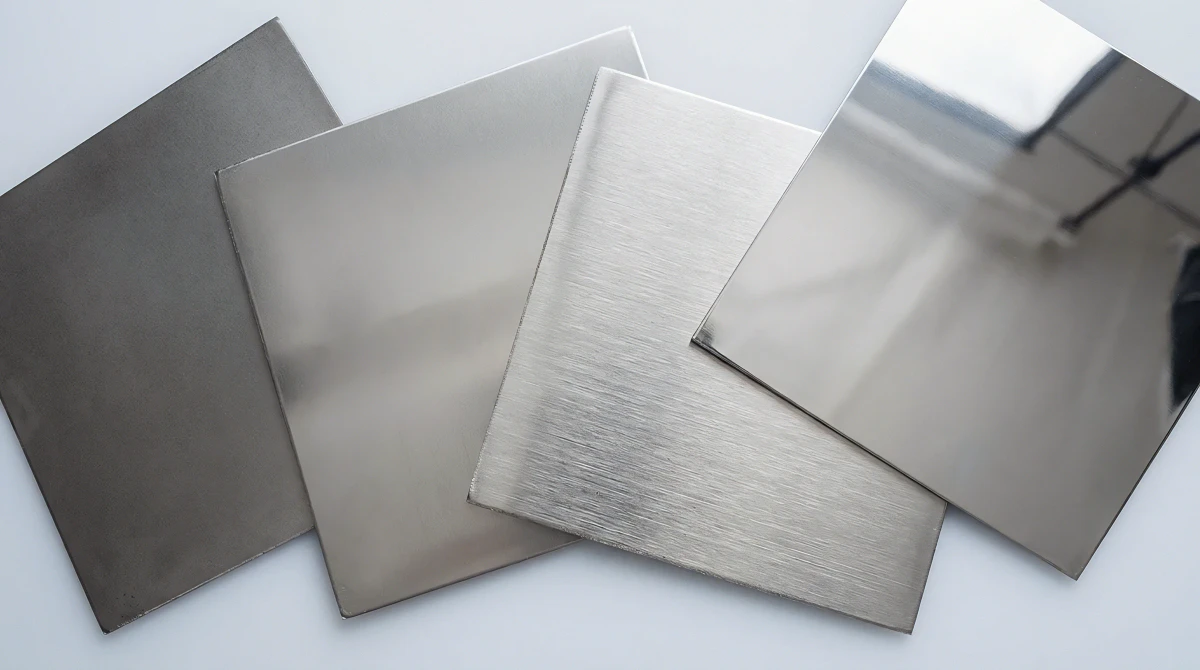
Euro Inox gives typical Ra values by finish. Code 2B runs 0.30 to 0.50 µm (12 to 20 µin), and hot rolled 1D runs 3.50 to 7.50 µm (138 to 295 µin). Code 2K has a transverse ceiling below 0.5 µm (20 µin). Bead blasted surfaces reach 1.00 to 6.00 µm (39 to 236 µin), and electropolished ones 0.10 to 0.80 µm (4 to 31 µin).
Read More

Writing the Limit

The notation changes the pass rate. A limit written “Ra ≤ 0.6 µm (24 µin)” is met if no more than 16 % of readings exceed it. Written “Ra max 0.6 µm (24 µin),” it is met only if none do. The Euro Inox roughness note asks for the criterion to be stated explicitly.

Grit Link

Brushed and ground finishes are named by the abrasive grit that makes them. Euro Inox gives approximate values: about 1.80 µm (71 µin) at 80 grit and 0.38 µm (15 µin) at 240 grit. At 600 grit it is about 0.13 µm (5 µin). The values are for orientation, since instruments and operators differ.

Against Rz5

ISO 9013 grades cut edges by Rz5, a peak-to-valley value that runs larger than Ra. A callout of Ra 3.2 µm (126 µin) therefore cannot be read against the ISO 9013 table.

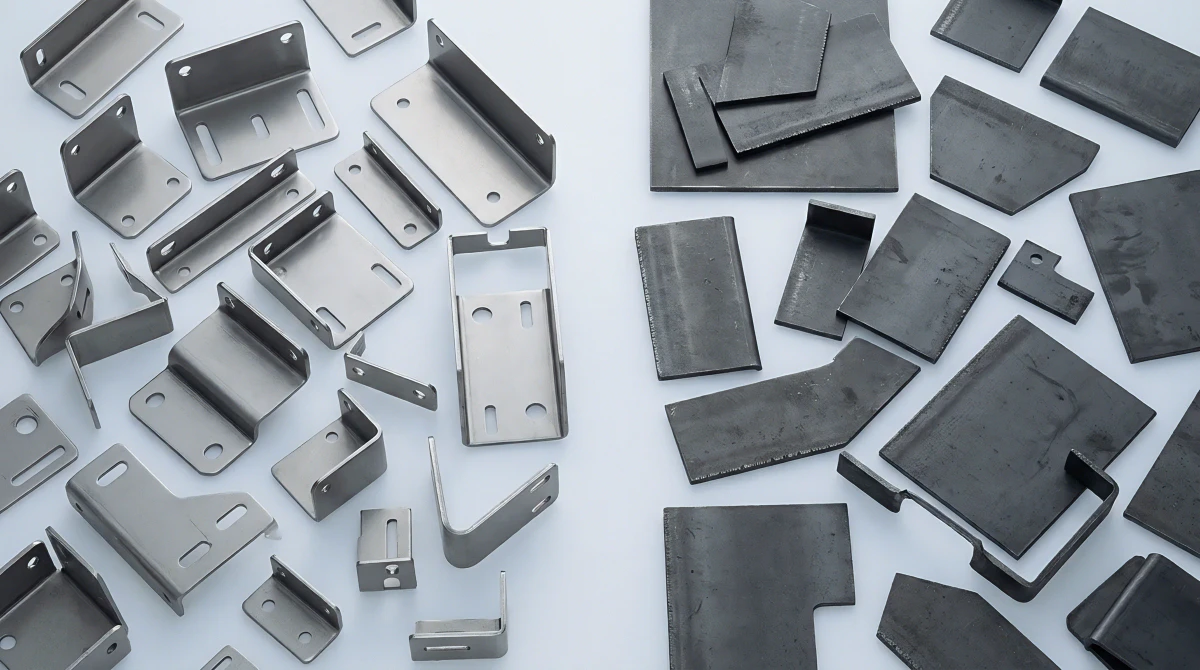
Cold Rolled DC01 and Hot Rolled S235 Steel Sheet for Cut and Bent Parts

Choose DC01 for thin formed parts that need tight thickness, flatness and a clean surface, and S235 for thicker load-bearing parts, then name the standard on the order.

DC01 and S235 Compared for Laser Cut and Bent Sheet PartsDC01 is a cold-rolled non-alloy mild steel for cold forming under EN 10130, material number 1.0330, which ArcelorMittal describes as having a guaranteed maximum yield and tensile strength, a guaranteed minimum elongation and good formability. S235 is a hot-rolled carbon-manganese structural steel under EN 10025-2, described by the same mill as having a guaranteed minimum yield and tensile strength and satisfactory ductility, in JR, J0 and J2 versions that differ in impact-test temperature.
ISO 9013 Laser Cut Edge Quality Ranges for Squareness and Roughness

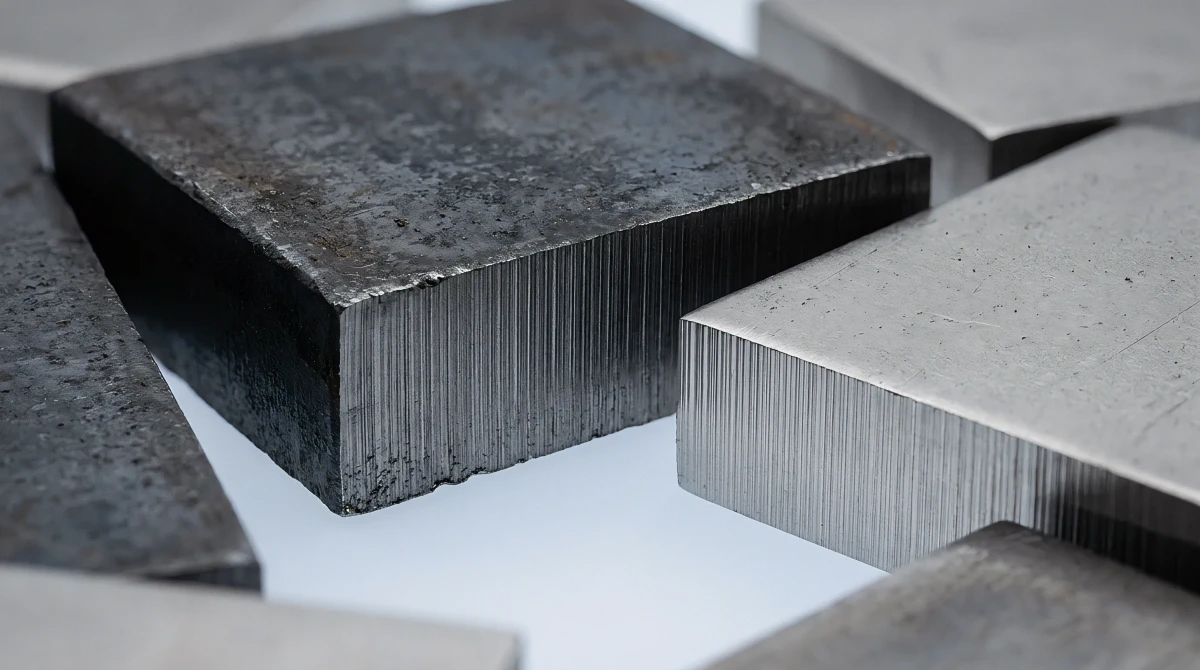
Pick a squareness range and a roughness range by thickness, add the dimensional class, and agree how thin sheet is measured.

What the ISO 9013 Ranges Tell You About a Laser Cut EdgeISO 9013:2017 presents geometrical product specifications and quality tolerances for thermal cuts in materials suitable for oxyfuel flame cutting, plasma cutting and laser cutting. Its scope runs from 3 mm to 300 mm for flame cuts, 0.5 mm to 150 mm for plasma cuts and 0.5 mm to 32 mm for laser cuts.

316L Stainless Steel Sheet for Laser Cutting and Bending

Choose the molybdenum-bearing low-carbon grade for chloride exposure, plan overbend on the brake, and write the finish and weld tint rules on the drawing.

What 316L Sheet Adds Over 304L in a Cut and Bent PartType 316L is Type 316 with the carbon ceiling lowered from 0.08 % to 0.03 % by weight. Both carry 16.0 to 18.0 % chromium, 10.0 to 14.0 % nickel and 2.00 to 3.00 % molybdenum, according to the Cleveland-Cliffs product bulletin for the two types.

Request a Sheet Metal Quote

Send the 2D drawing and the 3D file, with the quantity and the stage of the project. An engineer replies within 1 working day.

The quote form, the mutual NDA and the private folder for your files are on Protolis Atelier, with Sheet Metal chosen.

Request a Quote